




MFG DAY and Month Happenings in Tampa Bay
The month of October saw over 30 student tours in Pinellas and Hillsborough Counties, but many other events celebrating Manufacturing in Florida also took place. Here are a few highlights!
October 4- Upper Tampa Bay-Florida SunCoast Manufacturing Association (UTBMA) Sixth Annual Advanced Manufacturing Awards Ceremony at Nielsen Global Technology, Oldsmar.
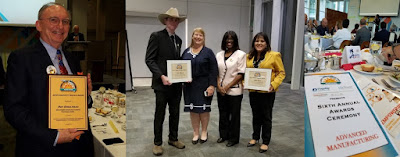 The UTBMA is dedicated to serving the unique business and networking needs of the approximately 400 manufacturers located in the region. The 2018 awards ceremony recognized regional manufacturers for their exemplary labor in manufacturing innovation and for the first time outstanding students and alumni were also recognized. During this event, FLATE’s dear friend Roy Sweatman from Southern Manufacturing Technologies received the distinguished 2018 Service Award. The 2018 Student Excellence award was presented to Michelle Puentes from Hillsborough Community College and Ryder Fizpatrick from St. Petersburg. Michelle and Ryder were recognized for their outstanding perseverance, leadership and academic achievement in pursuit of a career in advanced technology and manufacturing.
October 9- Manufacturing Alliance of Hillsborough County M-Pact Meeting hosted by Southern Manufacturing Technologies (SMT), Tampa.
The Manufacturing Alliance of Hillsborough County is working to build a better future for our region’s manufacturing industry. Through M-Pact meeting series, manufacturers connect to address the latest trends and challenges facing our industry. This M-Pact meeting, hosted by SMT, focused on improving the talent pipeline and provided an provided an overview of National and State apprenticeship opportunities for manufacturers by Richard (Ted) Norman, Florida Department of Education’s State Director of Apprenticeship, Division of Career and Adult Education in Hillsborough County. In addition, a local apprenticeship model was presented by Steve Cona III, President/CEO of Associated Builders and Contractors Florida Gulf Coast Chapter, and a SMT machinist apprentice Robert Falor spoke to manufacturers and educators about his apprenticeship program and life experience.
As the manufacturing sector’s most passionate advocates, Manufacturing Alliance of Hillsborough County are committed to changing the perception of modern manufacturing in Tampa Bay, simplifying the path to a successful manufacturing career, fostering critical connections across the manufacturing community, and guiding individuals and our community towards enduring prosperity. For more information about Hillsborough Alliance, visit https://madeinhillsborough.org/

 In addition to statewide data, you can find downloadable in-depth regional reports on that same MANUFACTS webpage. For example, the report for West Central Gulf Coast is 28 pages, was compiled by IHS and looks like the image to the left. In addition to West Central Gulf Coast, reports available for you to find include regional reports for Central Florida, the First Coast, Gainesville Area, Mid-Florida, Northwest Florida and Capital Region, South Florida, Southwest Region, and Volusia County. Check out the report for your region to gather local details to support your Manufacturing Day events.
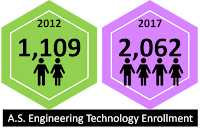 More Florida Manufacturing facts can be found on FLATE’s website with the Engineering
  articulated pathways into college programs and dual enrollment with the A.S.E.T. The Florida Advanced Manufacturing high school program has shown significant growth in the past several years. Here are a few FACTS captured from this
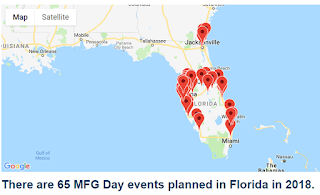 A summary of MFG DAY-FL student tour data for the past 5 years is posted on the
  Since 2012, MFG DAY/Month has grown across the nation. A central focus of the celebration is to introduce Advanced Modern Manufacturing to young people in order to attract them to careers in the industry. If Florida, FLATE and its many partners that include regional professional and business associations, Workforce and Economic development organizations, educational institutions of all levels have organized student tours and other events to celebrate the industry and introduce the community, especially students, to manufacturing and its many great careers. It’s time to plan for MFG DAY/month in FL 2018.
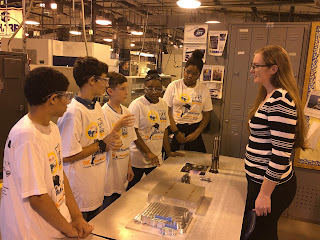 I encourage ALL manufacturers to host student tours. 100% of the feedback we have gotten over the past 5 years from company hosts is incredibly positive: that the tours were a good investment of time and energy; their own workforce was jazzed by experience of having student visitors, and a few had direct hires. The vast majority said it was also great for company morale. Overall, its been all great! Here is what you need to get started:
 The terms Mechatronics and Vacuum Technology represent 20th Century state-of-the-art “tags” for leading edge STEM based skill sets that are even more significant in this 21st century digital world. Mechatronics was coined in the 1960’s to verbalize the then brand new integration of mechanical and electronic knowledge for commercial (automobiles, etc), space (moon mission) and defense (ICB’s) applications. Vacuum Technology could trace its heritage to the 19th Century (Edison’s work with incandescent filaments for example) but certainly is anchored in technology development (radio and television) in the 1920’s and cemented in all advanced technologies triggered during and post Manhattan Project. Although there is always a tendency to rebrand almost everything (IHOP to IHOB for the latest example), new identifiers for either of these incredibly STEM based skill sets is not necessary. What is important is to recognize that from a technician’s perspective both are indicative of the required and similar advanced knowledge and skills for today’s advanced manufacturing sector technicians.
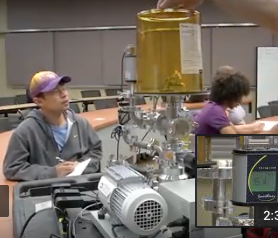 FLATE is now beginning an initiative to build a community of practice that supports vacuum technology and its overlapping Mechatronics skills. The National Science Foundation Advanced Technological Education program (NSF-ATE) is supporting FLATE activities focused on technician education that lead to careers in advanced manufacturing that depend on vacuum technology and science skills and knowledge. FLATE has entered into a partnership with the American Vacuum Society (AVS) to identify the essential skills that are and will be essential to support this industry sector. (The AVS is the internationally recognized premiere organization of academic, industry, Department of Defense, National Laboratory, and NASA STEM professionals that require or use controlled pressure environments to accomplish their missions.) This objective will be reached through a joint effort by the AVS Education Committee, Normandale Community College in Bloomington, MN, and FLATE. The work has already begun at workshop supported by AVS at the Colorado School of Mines that took place in early June. Stay tuned for the next steps in this project in the fall of 2018. For more information, contact
  The recommendations released come from three years’ worth of research and feedback from more than 10,000 Floridians in each of Florida’s 67 counties as part of the Florida 2030 initiative- a multi-million research initiative that seeks to identify the challenges and opportunities Florida has between now and 2030, and to create a blueprint for Florida’s future. Recommendations found that:
 FLATE, FloridaMakes, the Able Trust, Economic Development organizations and Educational institutions gathered to hear the specific recommendations for Talent and Education Pilar of Project 2030 at the recent Earners to Learners Summit held in Tampa. In addition to the project recommendations, Commissioner Pam Stewart presented the Commissioners Business Recognitions Awards during the event. These awards to a number of exemplary programs and businesses around the state. The award winners are posted here:
  October 5 marks the official kick off for Manufacturing (MFG) Day with industry tours, open houses, career fairs and other miscellaneous events being planned in Florida and across the country.
 Every year, the Florida Advanced Technological Center-FLATE, helps middle school students by mentoring in their Engineering Capstone projects. The 8th grade STEM students are tasked to exhibit technical expertise to solve challenging problems by producing ideas and products that have the potential to be marketed in the real world.
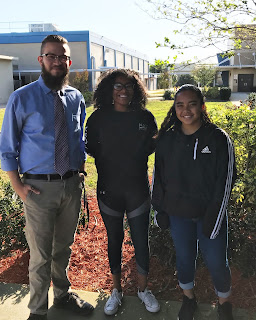 To support some of its STEM based initiatives, J. Madison Middle School also created the “Ghost Riders STEM Institute”, now referred to as the “STEM Aerospace Engineering Academy”, and has recently started the 8th grade capstone project which involves the development and creation of an innovative product over the period of the whole year. Each student group is mentored by an “expert professional” in the field. These professionals, or experts, would help them complete their projects with their guidance. Meetings with mentors are performed via phone, emails, and video provide each group with the proper direction for the creation of their product.
 Engineering Capstone Project- Lead The Way (PLTW), another project supported by FLATE, provides a comprehensive approach to STEM Education. Through activity, projects, and problem-based curriculum, PLTW gives students in high school a chance to apply what they know, identify problems, find unique solutions, and lead their own learning. The implementation of this program provides tools to empower students and transform the classroom into a collaboration space where content comes to life.
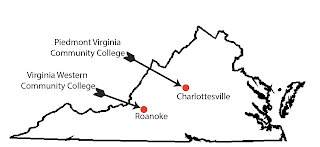 This month FLATE had the opportunity to visit two two-year advanced manufacturing and mechatronics programs in Virginia: Piedmont Virginia Community College (PVCC) in Charlottesville and Virginia Western Community College in Roanoke (VWCC). PVCC was hosting an outreach event for high school programs to introduce the students to their new program launched this academic year. Over one hundred twenty juniors and seniors from 4 regional high schools arrived at the college for a 10 am program start. After welcome from the program director and dean, a lively panel of local manufacturing and production employers talked to the young people about their companies and what they make. They went on to talk about the kinds of skills new employees need to have to be hire and successful in their companies. The business sectors represented all voiced the need for some common fundamental technical skills like measurements, electronics and quality. They also strongly endorsed the need for personal success skills (employability skills, soft skills, personal skills, etc). After the lively discussions and questions from the audience, the students cycled through four stops: manufacturing lab tour and program information; company displays where they showcased their products and individually talked about their technician workforce needs. Several high school and college engineering student projects were also on display. The last two stops were hands on activities building a small ball bearing system and wiring a LED light circuit. It was a great opportunity to get ideas for effective outreach and benchmark the labs of our Florida Engineering Technology programs, and hear about the workforce needs of manufacturing companies in other states and regions.
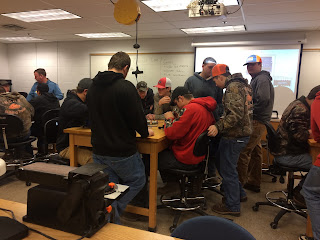 My second visit was to Virginia Western Community College (VWCC) located in Roanoke, VA. The mechatronics degree at VWCC was started by and still let by program manager Dan Horine about ten years ago. The program has grown to well over 100 students and has attracted a number of manufacturers to the region. After visiting the mechatronics, computer aided drafting and “Fab” lab, I was lucky to observe the following required mechatronics systems course: ENG 105 – Problem Solving in Engineering Technology:
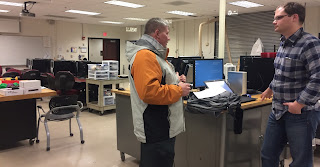 You can find out more by visiting the colleges’ websites: