


2018 Manufacturing Day/Month – SAVE THE DATE!
 October 5 marks the official kick off for Manufacturing (MFG) Day with industry tours, open houses, career fairs and other miscellaneous events being planned in Florida and across the country.
This year FloridaMakes, FLATE and the network of Regional Manufacturers Associations across the state are taking the lead in organizing statewide industry tours and events that kick starts on MFG Day/Month. Counties and cities across Florida are set to issue proclamations marking October as MFG Month. Thousands of students and educators from schools across Florida are also anxious to participate in industry tours that are geared to showcase products that are “Made in Florida” as well as get an up-close and in-depth look at high-skilled, high-wage careers that the industry offers. Manufacturing Day is expected to be celebrated across Florida, and there are a number of ways to be involved in this nationwide event that focuses on the strength of American Manufacturing.
For more information and Florida’s MFG Day/Month educational resources, please visit these online sites.
Made in Florida Industry Tour Educational Resources
Pre & Post Tour – Teacher Lesson Plan
CIS Lessons to be used w/industry tours
If you are interested in hosting a student tour either on Manufacturing Day or any day during the month of October, please contact your local Regional Manufacturers Associations and Regional MFG Day team in your area.
For information on MFG Day/Month in Florida visit FLATE, www.mfgday-fl.org, or contact Dr. Marilyn Barger at barger@fl-ate.org.
 Every year, the Florida Advanced Technological Center-FLATE, helps middle school students by mentoring in their Engineering Capstone projects. The 8th grade STEM students are tasked to exhibit technical expertise to solve challenging problems by producing ideas and products that have the potential to be marketed in the real world.
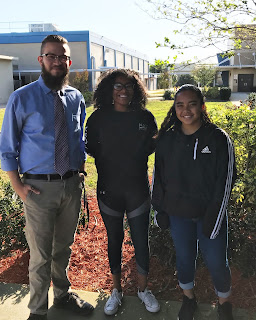 To support some of its STEM based initiatives, J. Madison Middle School also created the “Ghost Riders STEM Institute”, now referred to as the “STEM Aerospace Engineering Academy”, and has recently started the 8th grade capstone project which involves the development and creation of an innovative product over the period of the whole year. Each student group is mentored by an “expert professional” in the field. These professionals, or experts, would help them complete their projects with their guidance. Meetings with mentors are performed via phone, emails, and video provide each group with the proper direction for the creation of their product.
 Engineering Capstone Project- Lead The Way (PLTW), another project supported by FLATE, provides a comprehensive approach to STEM Education. Through activity, projects, and problem-based curriculum, PLTW gives students in high school a chance to apply what they know, identify problems, find unique solutions, and lead their own learning. The implementation of this program provides tools to empower students and transform the classroom into a collaboration space where content comes to life.
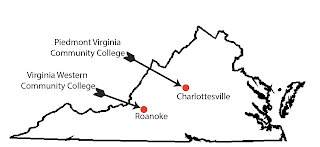 This month FLATE had the opportunity to visit two two-year advanced manufacturing and mechatronics programs in Virginia: Piedmont Virginia Community College (PVCC) in Charlottesville and Virginia Western Community College in Roanoke (VWCC). PVCC was hosting an outreach event for high school programs to introduce the students to their new program launched this academic year. Over one hundred twenty juniors and seniors from 4 regional high schools arrived at the college for a 10 am program start. After welcome from the program director and dean, a lively panel of local manufacturing and production employers talked to the young people about their companies and what they make. They went on to talk about the kinds of skills new employees need to have to be hire and successful in their companies. The business sectors represented all voiced the need for some common fundamental technical skills like measurements, electronics and quality. They also strongly endorsed the need for personal success skills (employability skills, soft skills, personal skills, etc). After the lively discussions and questions from the audience, the students cycled through four stops: manufacturing lab tour and program information; company displays where they showcased their products and individually talked about their technician workforce needs. Several high school and college engineering student projects were also on display. The last two stops were hands on activities building a small ball bearing system and wiring a LED light circuit. It was a great opportunity to get ideas for effective outreach and benchmark the labs of our Florida Engineering Technology programs, and hear about the workforce needs of manufacturing companies in other states and regions.
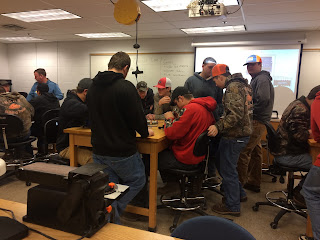 My second visit was to Virginia Western Community College (VWCC) located in Roanoke, VA. The mechatronics degree at VWCC was started by and still let by program manager Dan Horine about ten years ago. The program has grown to well over 100 students and has attracted a number of manufacturers to the region. After visiting the mechatronics, computer aided drafting and “Fab” lab, I was lucky to observe the following required mechatronics systems course: ENG 105 – Problem Solving in Engineering Technology:
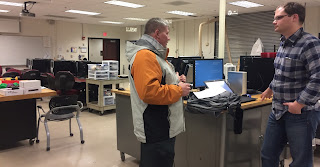 You can find out more by visiting the colleges’ websites:
 On November 9, 2017, FLATE partnered with the
 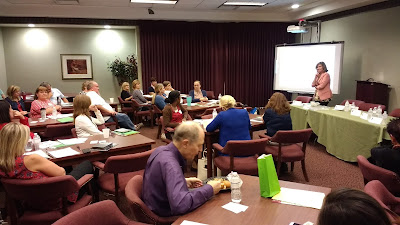 All the panelists emphasized that employees, up and down the company’s organizational chart
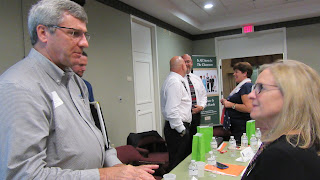 FLATE and the Stavros Center are now planning to take this workshop “on the road” to bring
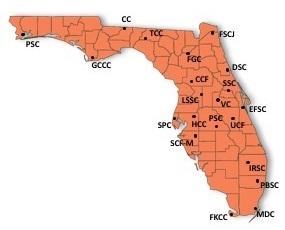 To this end, we developed credentialed-based articulations to the A.S. Engineering Technology (A.S.E.T.) to give full credit for a number of credentials thereby accelerating the time completion. This pathway model has been adopted in many disciplines and at many college across the nation. Now in 2017 I am excited to share the work done at Daytona State College (DSC) to establish a statewide articulation for all A.S.E.T. graduate in any of the 10 specializations at over 20 state and community colleges to the B.S. Engineering Technology (B.S.E.T.) that will go into effect early in 2018. This sounds like a “no-brainer” because there are many smooth “2+2” Associate of Arts (A.A.) to Bachelors of Arts or Science (B.A. or B.S.) degree. However, technical degrees for which the main focus is prepare students to enter specific technical jobs upon completion not necessarily to continue to a bachelor’s degree. Additionally, there are critical criteria that must be met for baccalaureate degrees that are set by institutional accrediting agencies, state governing boards, and discipline-specific accrediting organizations (in the case for Engineering and Engineering Technology, that organization is ABET (
 An additional challenge, and perhaps magic for (for those of us who live in education domain is the fact that the B.S.E.T. at DSC can be taken remotely with online and hybrid courses. The hybrid courses have four options for completing the hands-on lab exercises: 1) Complete the exercises at Daytona State in the college labs; 2) Purchase a lab kit for the course sold through the Daytona State bookstore; 3) arrange to do the lab portions at the local A.S.E.T. degree-offering state or community colleges; or 4) arrange to complete the lab activities at a workplace with a designated proctor. This generates many degrees of freedom for students but all of these options support efficient pathways to the B.S.E.T. degree.
 Interested in the B.S.E.T. degree, please contact Dr. Ron Eaglin at Daytona State College (
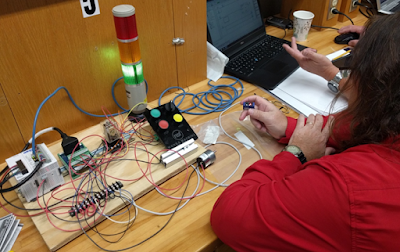 The week before the Mechatronics Southern (SWC) Working Connection in Jacksonville, FLATE hosted half-day Mechatronics workshop at the HI-TEC Conference in Salt Lake City. Partnering with Dan Horine from Virginia Western Community College and the NSF ATE PACE-ME grant and Doug Laven from the South Central College (MN) and the NSF ATE iMEC grant project to present the workshop. These two experienced mechatronics educators led the eighteen attendees through wiring, troubleshooting, programing basic commands to solve fundamental problems. Wiring the hardware allowed participants to trace the communication flow through the system.