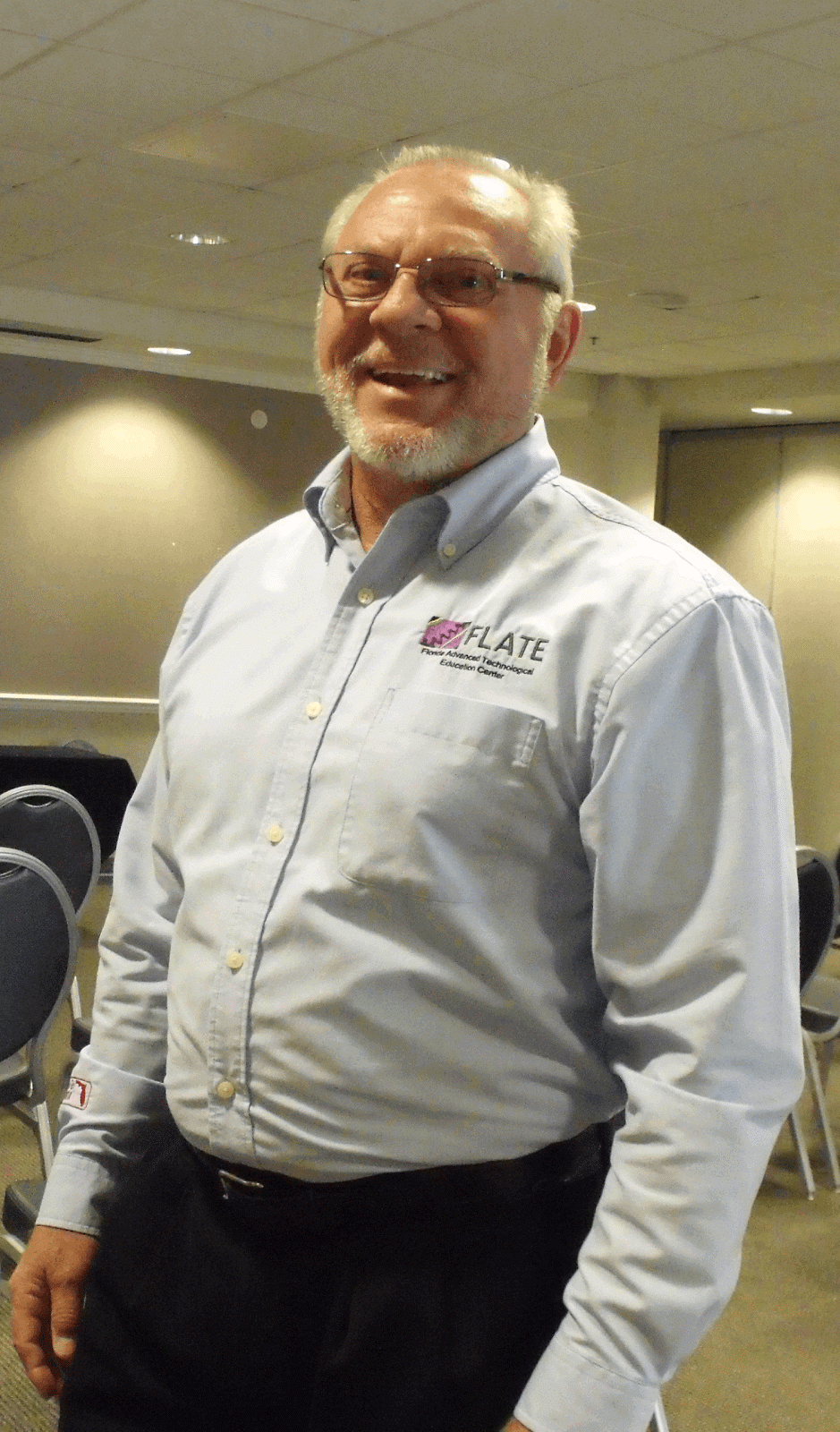
FLATE News for March 2012 is that David Gula, FLATE Outreach Manager, is retiring this month. Dave tells us it’s his 5th, or so retirement. I haven’t probed back to the first one, but maybe this will be his last. Dave came to FLATE at our very beginnings, channeled to us from the Florida High Tech Corridor’s Tech Path’s efforts. In 2002, FLATE was still an idea with promise. The promise inspired the National Science Foundation’s Advanced Technological Education program to invest $70,000 in a “Planning Grant for one year for the FLATE leadership team to develop its “plan,” and define the regional and statewide need.” Looking for something to do and someplace to volunteer to help grow the pipeline of students interested in STEM career pathways, Dave started attending our NSF ATE Regional Center Planning Grant meetings. His contributions to our “volunteer” planning team’s activities and to our mission became so valuable that we convinced him to accept a contract to help us with our industry surveying during that period. This activity defined the need for educational reform for manufacturing education throughout the state.
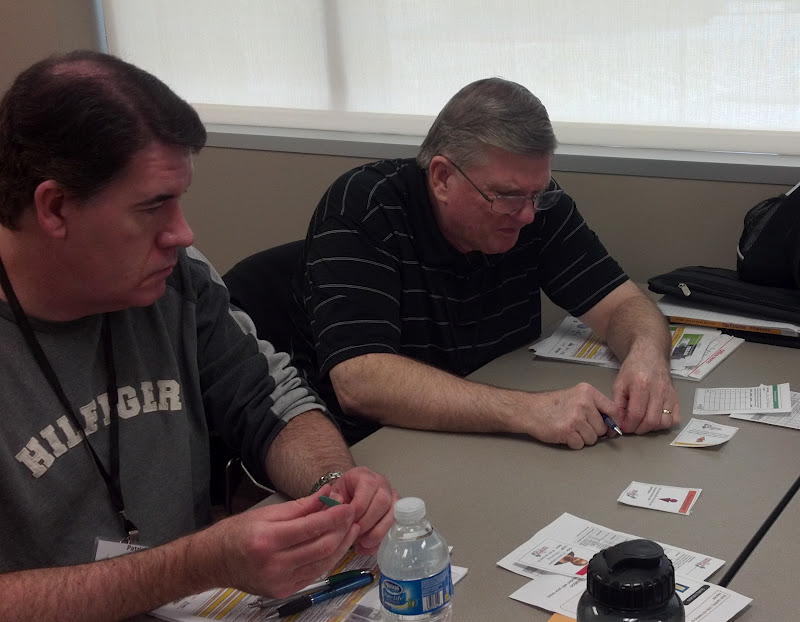
Peter Buczynsky, owner of PharmaWorks, manufacturing company in Odessa FL wants to expand his business and move into a bigger facility. He can’t. New England Machinery, another manufacturer located in Manatee County, FL is looking to expand its payroll. So far it hasn’t. These companies are not holding back due to a hiring freeze. According to recent reports published in the Tampa Tribune and in the Sarasota Herald Tribune, they are being held back due to an acute shortage of skilled workers. As schools slash funding for technical programs, manufacturers across the board are increasingly finding it difficult to find skilled machinists, engineers and technicians.
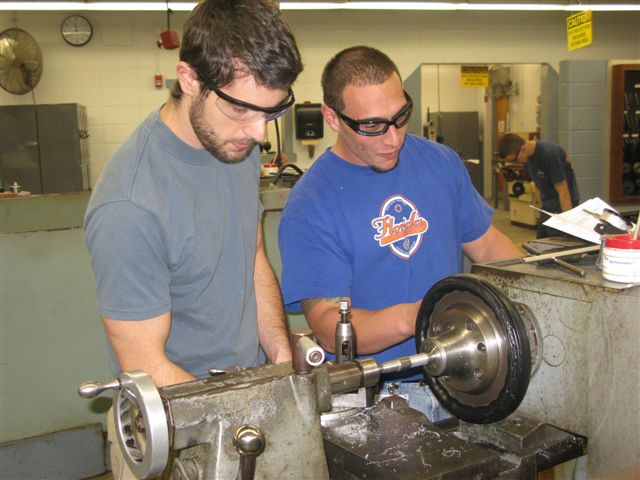
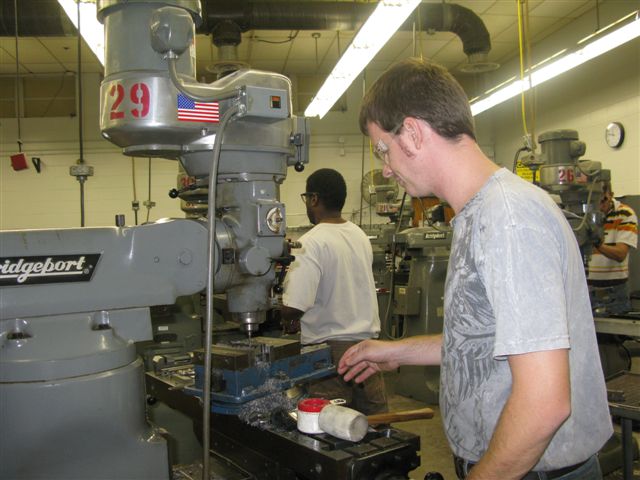
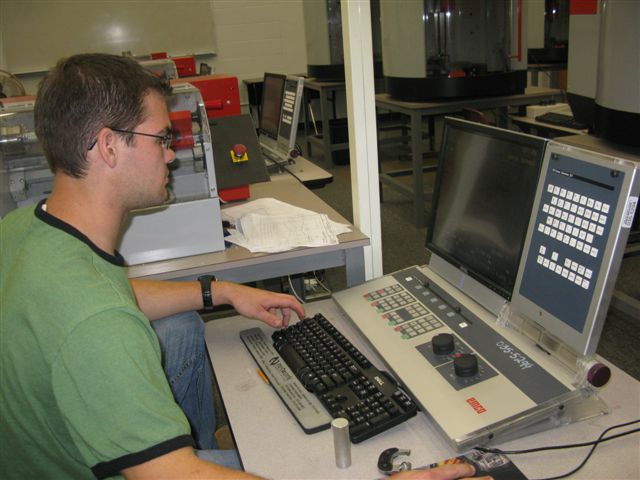
assistant director at the Campus is a machinist supporter extraordinaire who says “every consumer and industrial product exists because of machining…our modern life completely depends on the hard work and ingenuity of machinists.” The mission of the program, he says, is to prepare students for employment as entry level machinists, tool makers, lathe operators, mill operator, grinding operators, electrical discharge machine (EDM) operators and computer numerical control (CNC) machine operator/basic programmers. “We offer a problem solving atmosphere, and we share with them our experiences, which allows them to learn and be excited with this program.”
System affords maximum flexibility for trainees and employers alike. In that, the system “rewards trainees enabling them to advance at their own pace in defined career ladders throughout the metalworking industry.” Using attained competencies in lieu of a rigid set of hours, employers are able to effectively monitor and measure progress and reward individual initiative. Roy Sweatman, owner and president of Southern Manufacturing Technologies, a precision custom high-tech manufacturer in Tampa, agrees the competency based learning offered by the pTEC Machining program helps students learn things at their own pace based on their competencies. “A lot of manufacturing has moved offshore, and a few of us are working on getting manufacturing back onshore, and the NIMS program is a step towards that direction.” Sweatman said.
Industry certification is undoubtedly the cornerstone of the program. In addition to the NIMS certification, the machining program offers four, 30 hour courses in Safety, Manufacturing Processes & Production, Quality Practices & Measurement, and Maintenance Awareness which is part of the national Manufacturing Skill Standards Council certification (MSSC). Upon graduation, students not only earn a certificate of completion from pTEC, but a certificate from the Department of Education, Apprenticeship Division as well as a NIMS and MSSC certifications. Students completing the program can also receive college credits that can be transferred to a four year engineering program in Florida. “Industry recognizes and values certifications which in turn increases compensation and employability opportunities” McClendon said.
Indeed, the machining program together with the NIMS and MSSC certification is a powerhouse for graduating students. Given the high demand for machinists across the nation, graduates are assured of several lucrative opportunities serving as machine operators, machinists, tool & dye makers, designers, engineers or even entrepreneurs and business owners. A great advantage to students is that they are highly marketable and can get a job anywhere in the country. A claim confirmed by Sweatman who says “if someone walks into my office with a NIMS credential I will hire them immediately.”
For more information on the NIMS certification and the machining program at pTEC contact Eric McClendon at MCCLENDONE@pcsb.org, or visit www.myptec.org. For information on FLATE and its industry centered curriculum and outreach initiatives contact Dr. Marilyn Barger at barger@fl-ate.org, or visit www.fl-ate.org and www.madeinflorida.org.
Say you are a bicyclist who needs a console to mount a GPS to your bike’s handlebars, but don’t have the money, or equipment to produce a prototype of your invention. If you are innovative by nature, want to experiment transforming your ideas into making a product, a Fab Lab may be your Mecca. A Fab Lab or Fabrication Laboratory is a place where ideas come to life.
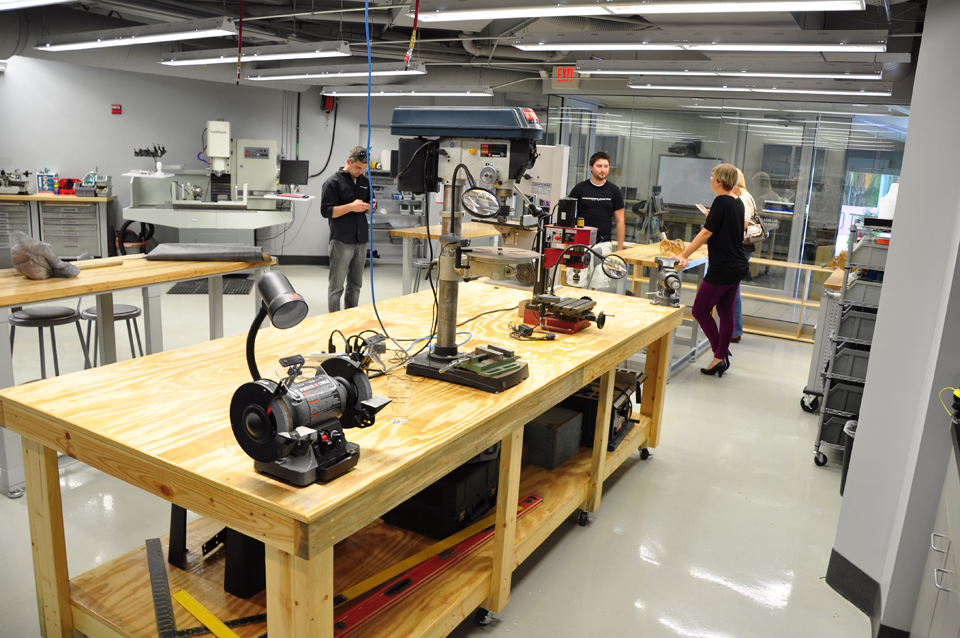
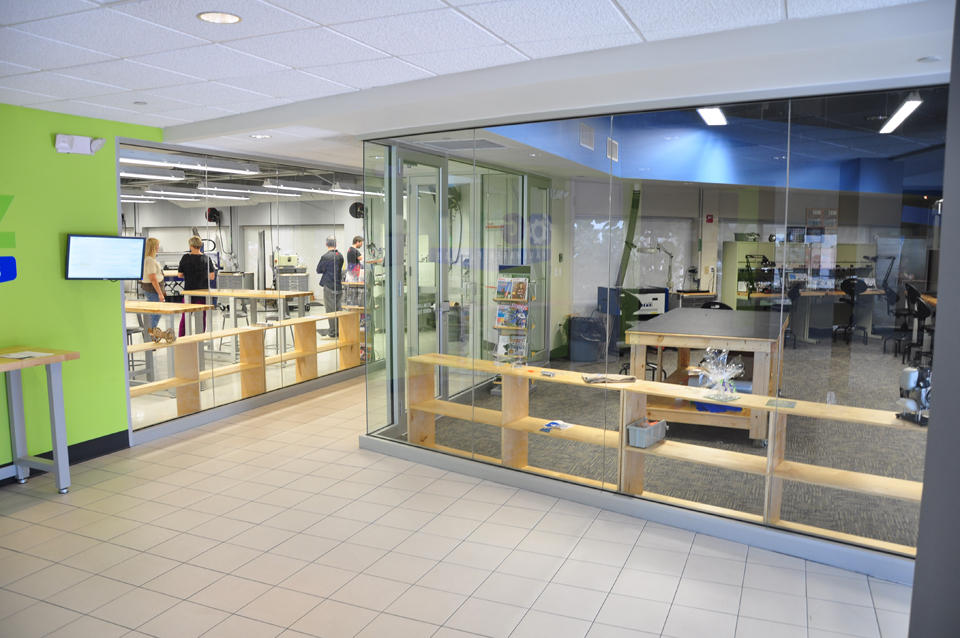
“gateway for lifelong adventures in science,” and was founded in 1990. The Fab Lab at the GWIZ museum came into being through the generous donations of Dr. Fritz Faulhaber who through the Faulhaber Family Foundation donated $400,000 to GWIZ to launch the project. It is a champion of science education not only in Sarasota County, but the entire state of Florida. What defines the fab lab is “personal manufacturing.” It is “custom creation” at its best. Its main purpose is to make one of a kind product rather than mass manufactured products. Although work in the fab lab entails using computers and computer-guided machinery, McGrath says the end result is a physical product, not merely a digital construction that ceases to exist when the lights are out. Given its mission to promote STEM (Science, Technology, Engineering and Mathematics) literacy through cross-disciplinary collaboration and innovation, the Faulhaber Fab Lab gives community members access to high-tech tools and materials as well as several high grade, industrial design and production equipment with simple design interface. The lab is equipped with CNC machines, manual metal cutting lathes, vinyl cutter, embroidery machines, CNC routers, soldering stations, and plasma cutters that enable users of all ages to make a number of products that range from plaques, puzzles, 3D portraits, gaskets, camera adaptors, or anything else they can think of.
helped, trained, mentored and supported students, teachers, as well as members from the community fine tune individual inventions using the latest cutting edge technology. McGrath describes the Fab Lab as “a space where people from all kinds of backgrounds can collaborate, create and brainstorm.” It is like a workshop, or a garage of the future that heavily promotes digital fabrication, and a place where “the practical applications of science, technology, engineering, mathematics and craftsmanship come into play.” Through it all, McGrath hopes to foster innovation, art, learning, craftsmanship, and the thrill of creating something from scratch, all the while promoting the understanding of STEM. For information on the Fab Lab at the Sarasota based GWIZ Science Museum contact Eric McGrath at ericm@gwiz.org, or visit www.gwiz.org. For information on FLATE’s STEM initiatives visit www.fl-ate.org and www.madeinflorida.org, or contact Dr. Marilyn Barger at barger@fl-ate.org.
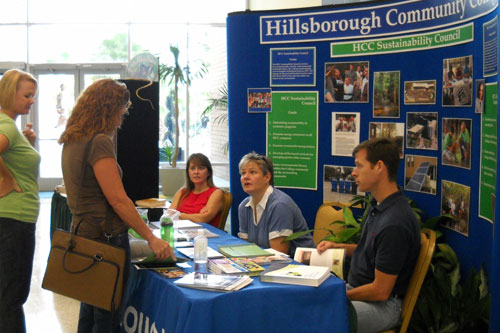
have campus-wide sustainability initiatives. HCC also has a comprehensive Climate Action Plan (CAP) outlining its approach to achieve college-wide climate neutrality by 2050. The CAP supports a vision of sustainability – balancing the natural environment, economic prosperity and the quality of life of the HCC community. Last April, HCC launched Zimride – a new carpooling opportunity for students designed reduce greenhouse gas emissions from travel. As a commuter school, HCC’s students and employees rely heavily on personal vehicles to travel to and from campus. With almost 48,000 students and 2,500 staff commuting to and from campus daily, greenhouse gas emissions generated by this travel comprise more than 75% of HCC’s entire carbon footprint. Through Zimride, students and staff are able to save money, preserve the environment and reduce campus traffic.HCC’s newest campus locations, the Southshore Campus and the Student Services building on the Ybor campus, reflect the college’s continued commitment to sustainable practices, receiving Gold and Silver LEED certification respectively. Through the College’s Sustainability Council, many ongoing educational opportunities are provided to the HCC community including the recently introduced Sustainability Power Performance Webinars. These Webinars focus on diverse “green” topics such as HCC’s Waste and Energy Management and Zimride.
For more information visit www.hccfl.edu/Sustainability/OurCarbonFootprint.html . For information on FLATE’s partnership with HCC on alternative energy systems contact Nina Stokes, project manager for FESC at stokes@fl-ate.org, or visit www.fl-ate.org/projects/fesc.html.
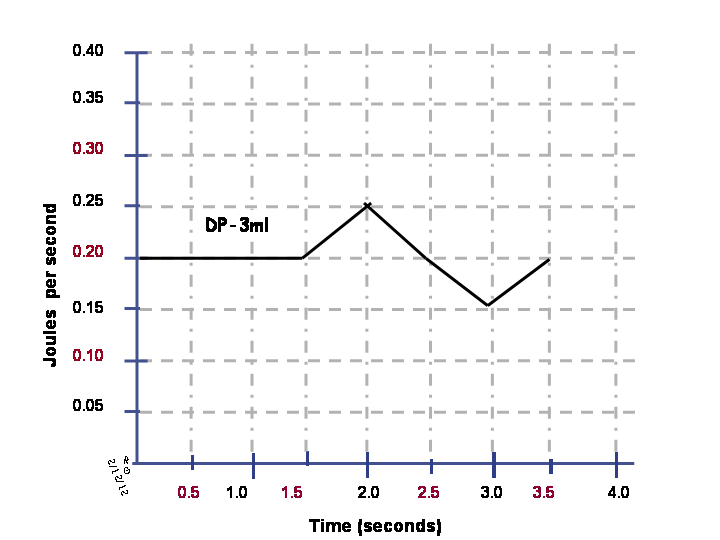
Data from a test evaluation of a miniature implanted pump, pump DP-3ml, for insulin delivery was obtained by a biomedical technician. In its normal implanted operation mode in a diabetic, the pump provides a two to three day insulin supply (3 milliliters) per operation cycle. As would be expected, power consumption (energy use) is an important design parameter. For this design test procedure, the pump is expected to use a total of 0.70 Joules of energy upon completion of the test. The technician examines the data and determines if the pump meets the test design criteria.
Pump DP-3ml meets test criteria. Yes or No. Submit, or check your answers at https://www.fl-ate.org/.
Bay Area Manufacturers Association (BAMA) has served as an effective voice for manufacturers, advocating issues that impact local manufacturers across the greater Tampa Bay region. “STEM Goes to Work,” a new initiative sponsored by the BAMA, recently gave local students an insider perspective on careers in manufacturing, and a chance to meet with local business leaders. The event was held in February and brought together both sides of the continuum by giving students in Pinellas and Hillsborough counties the opportunity to visit local manufacturing plants. This initiative supported ongoing efforts to raise awareness about the critical role that STEM (Science, Technology, Engineering and Mathematics) plays in ensuring that the U.S. remains the economic and technological leader in today’s global marketplace.
Given its goal to educate and showcase educational/career pathways in STEM-related fields, STEM Goes to Work” is scheduled to take place each quarter with the next one scheduled for March 31, 2012. Students from Greco School in Hillsborough County will tour Southern Manufacturing Technologies, Inc.—a high-tech manufacturing located in Tampa, and featured in the September 2011 edition of the FLATE Focus. During the tour executive manufacturing leaders will be available to meet with students to highlight the benefits of pursuing one of the many available positions in the manufacturing field. “Manufacturing in the U.S. is alive and well and has enjoyed 29 straight months of growth” said Roy Sweatman, president of Southern Manufacturing Technologies, Inc… He added “STEM Goes to Work is designed to teach students that and there are tens of thousands of great, well paying manufacturing jobs right here in Florida.”
In keeping with BAMA’s goal to promote STEM/manufacturing in Florida, FLATE also offers a similar program for middle and high school students throughout Tampa Bay. The Made in Florida Industry tours have been an effective vehicle in providing students a first-hand view of high-tech manufacturing. They are designed to stimulate student interest in today’s modern manufacturing careers and encourage the enrollment in the essential technology programs available throughout the state.
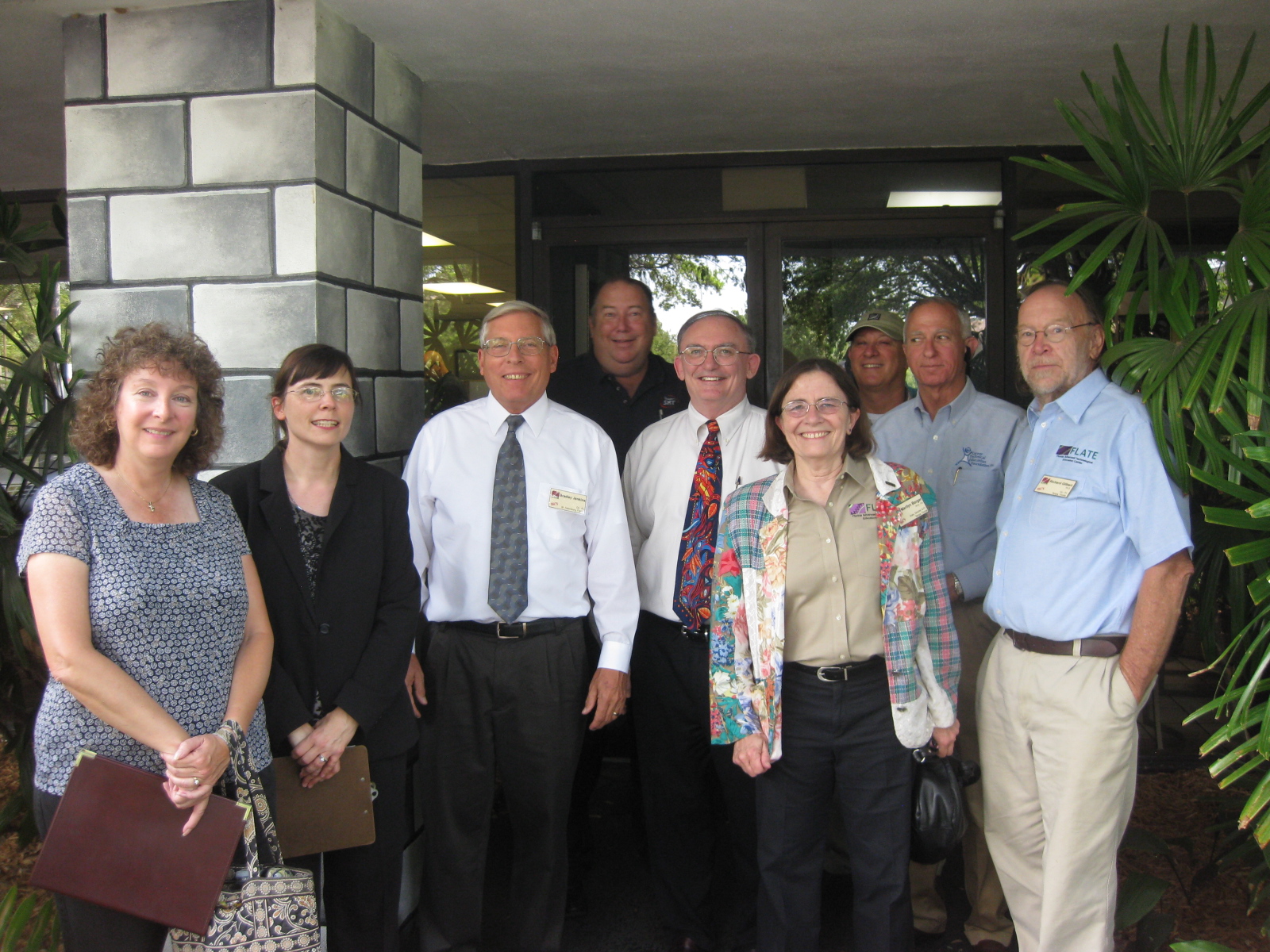
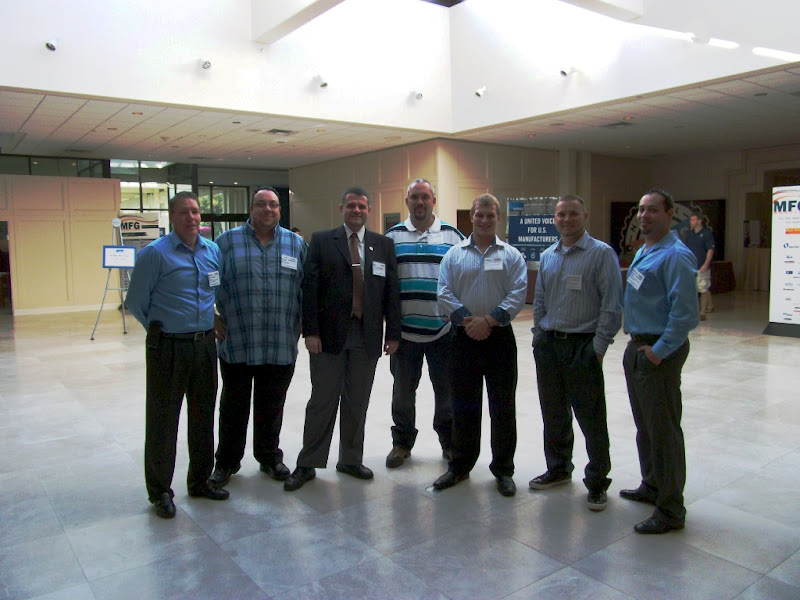
| FLATE IAC Members at SMT Sep. 2011 |
Since the culmination of the program in 2007, more than 3000 students and approximately 350 educators have toured 54 high-tech manufacturing facilities throughout Florida. As per a 2011 post tour survey, approximately 94% ‘Agreed’ or ‘Strongly Agreed’ that they wanted a high-skill, high-wage position. Dr. Marie Boyette, associate director of FLATE who attended the inaugural STEM Goes to Work event says “Effectiveness measures are key in student tour endeavors.” To that effect Boyette says “FLATE has developed student perception measures which will be used to evaluate the impact on students participating in BAMA’s STEM Goes to Work tour model.”
For information on BAMA visit www.bama-fl.org. For information on FLATE’s quality educational and training programs, or the “Made in Florida” industry tours contact Dr. Marilyn Barger at barger@fl-ate.org, and Dr. Marie Boyette at boyette@fl-ate.org, or visit www.madeinflorida.org.
The following week, FLATE conducted a Toothpick Factory workshop for 20 eager Educators in north Texas at the Convergence Technologies Center’s (www.convergencetechnologycenter.org) Winter
Working Connections conference and in early February we are conducting a workshop with Florida’s regional manufacturing associations to define concrete doable manufacturing awareness activities that they can take back to their local regions. Looking forward a bit, we are also working with BAMA (Bay Area Manufacturers’ Association) and the school districts in Hillsborough and Pinellas counties to put another industry-focused program in place for both the community and students. (Look for details on this innovative project in a future FLATE Focus newsletter).
In conjunction with FLATE’s statewide NSF-ATE mission, this year our professional development activities are reaching into the sometimes challenging faculty and grant development domains. FLATE is helping Florida’s Biotechnology Education Consortium (BECON) implement a faculty forum similar to the statewide engineering technology forum that FLATE supports. This forum mechanism is a great way to share resources, to strengthen programs, and to better align and connect to the program’s target industry. BECON’s 2nd forum was in January 27, and our semiannual Engineering Technology Forum is scheduled for March 29-30 at Indian River State College in Fort Pierce. If you wish to attend, just contact Brad Jenkins, (jenkins.bradley@spcollege.edu) for details, or find details about the meeting in our website at https://fl-ate.org/projects/et-forum.html.
On this same NSF front, we are continuing to help small community colleges around the country develop and format their NSF-ATE grant proposal ideas. Contact Richard Gilbert (gilbert@usf.edu) if you need help with your ideas. Closer to home, on March 9, FLATE will conduct a workshop for college educators on NSF grants and how they work. You can access online registration on the FLATE home page. The HCC Brandon Campus is co-sponsoring this event.
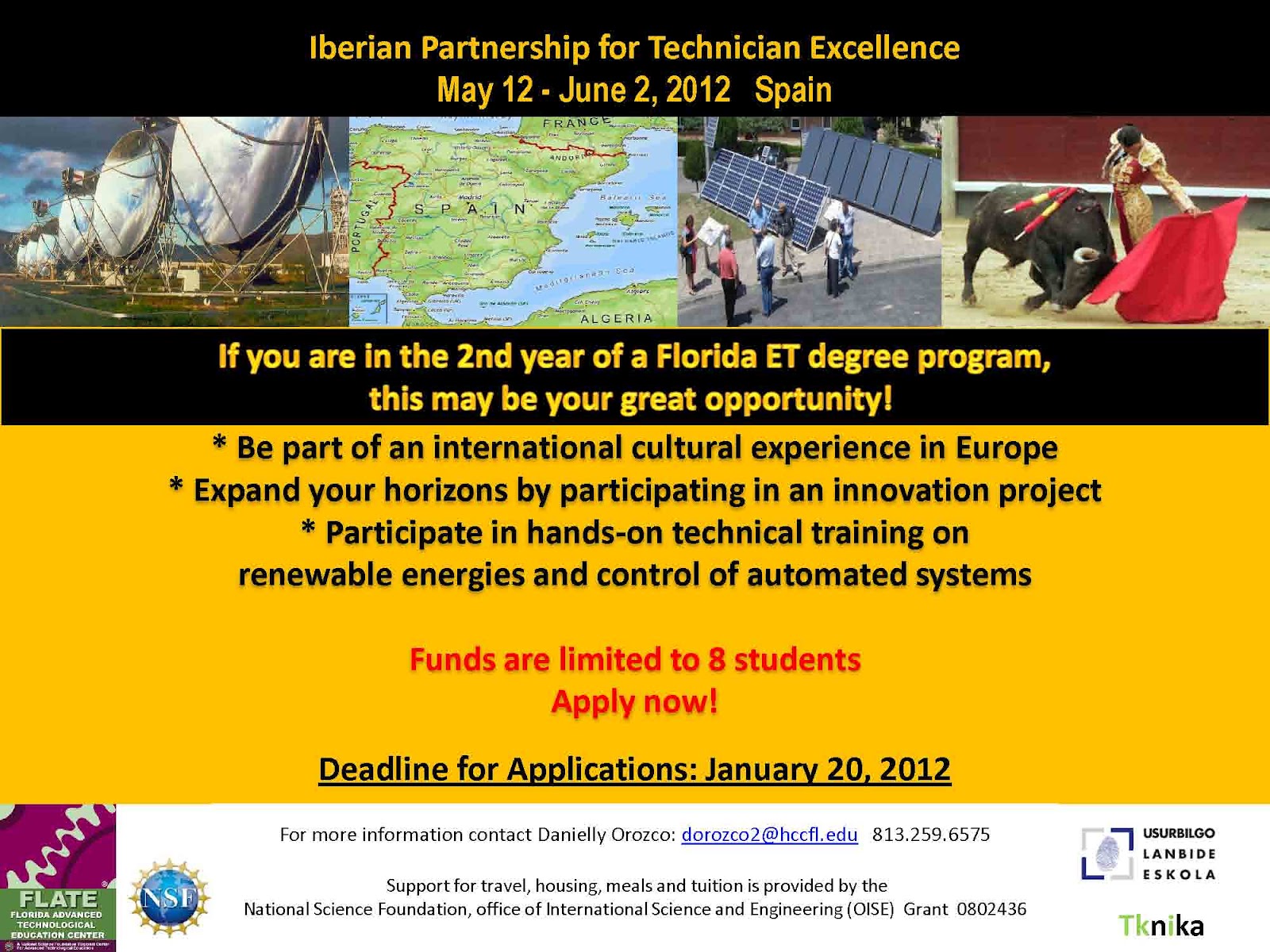
One of the really exciting activities this spring is the beginning of the next phase of our partnership with TKNIKA (www.tknika.net). In May, a group of second year Engineering Technology students from various colleges in Florida will study at one of the colleges, Usurbil, in the Basque region of Spain. This unique experience usually reserved for students enrolled in four-year undergraduate programs, is being offered to two-year technical students and supported by NSF-ATE. Through this partnership with TKNIKA in the Basque region, an analogous organization to FLATE in Florida, we are structuring this event as a professional development opportunity for faculty in both countries.
There are still more FLATE professional development events scheduled to round off the spring. A half day metrology workshop is planned for high school teachers at HCC Brandon on April 6, and we will bring a programmable logic control workshop into our faculty development portfolio. The workshop will be held April 13-14 at HCC-Brandon in partnership with Gulf Coast State College. In mid June we will sponsor our second engineering technology summer institute as well as our 3rd annual teacher summer camp, and host a STEM Cart workshop for STEM teachers with LabVolt in late spring and early summer. This will be an excellent opportunity to see how STEM fits into your classroom on a daily basis without interrupting the structure, or intent of your current lesson plans.
Summer brings a lot of education-focused activity, including the FACTE, Florida Association of Career and Technical Education (www.facte.org) annual conference and HI-TEC (www.highimpact-tec.org) which is in Denver this year. You can find more NSF-supported summer workshops around the country at www.teachingtechnicians.org. Take advantage of these low cost and high quality workshops that cross the spectrum of advanced technologies. Well, that’s a fly-bye of FLATE’s professional development plans, but for the FLATE team there is still a lot left on our activity plate.
This issue of FLATE Focus highlights some of our partner activities including a teacher professional development workshop at EMS-USA for STEM teachers in Hillsborough County; tours to the BAE shipyards in Jacksonville by 60 students in Peterson Academies of Technology; and a follow-up story about NSF’s continued commitment to streamline/invest in Florida’s technical programs. Unfortunately, this FLATE Focus issue is not able to cover all the activity and projects that are under way, but you can catch up on some and follow-up on others in our “announcements section” which is designed to post information on upcoming events. Do send us what is happening in your area so we can help disseminate. Finally, believe it or not, after two years of published puzzles, check out the first published answer to any of the sTEm-at-work puzzles – ever! So don’t miss it!!
When you think of “Food Factor” chances are you’re not thinking LEGOs and robots. To strike a connection, FIRST Lego League took a leading step in 2011, and designed the “Food Factor Challenge.” Since its inception in September 2011, over 200,000 participants, ages 9-16, from over 55 countries have embarked on a journey to explore food safety, determine the cause and susceptible points for food contamination, and evaluate methods and solutions to prevent different forms of contamination. (Source: FIRST Lego League).
In all of this, where does the robotics factor come into play? Desh Bagley, CEO of Tech PlayZone and Director of the Suncoast FLL tournament says LEGOs and robots are mere “hooks” to get young people interested and excited about STEM (Science, Technology, Engineering and Mathematics). Bagley who has been involved with FLL through her company Tech PlayZone for the past six years played a pivotal role in facilitating the 2011-2012 regional FLL event. The tournament, held in January at Hillsborough Community College (HCC) at the Regent—the satellite campus of HCC in Brandon, brought together over 150 students not only from the greater Tampa bay region, but from Pasco, Pinellas and Orange counties.
building, testing and programming a robot using LEGO® MINDSTORMS® NXT robots to solve a set of food safety missions. Coaches worked with individual teams on fine tuning engineering and programming components to build a robot using gear ratios, torque, force, motion and speed. Greg Verrill, teacher at Lomax Elementary School and coach for the Robo Panthers described the competition as a stepping stone to expose students from all backgrounds to robotics. He says being a part of the team helps students work cohesively as a team, to take on leadership roles, and also “helps fuel national effort to create an interest in STEM and engineering.”The second portion of the game focused on researching, developing and sharing innovative safety solutions. Teams had to undergo a technical interview, talk to judges about their robot and programming concepts, and defend the individual theories and solutions behind their research. Kyle Coker and Hunter Dennis, 8th graders at Williams IB described the challenges as “a lot of fun.” Kyle, who aspires to be the “the next Steve Jobs, or Bill Gates” says what excites him about robotics is the opportunities. His fellow team mate Tushar’s take-home nugget lay in “winning is not everything…what matters is how you can apply what you learned to the outside world.”
Given the in-depth nature of the challenge, teams began working on their project in September 2011. For example, Williams IB Middle Magnet school in Tampa chose beef contamination
as their topic. Through research they learned that a Japanese scientist studied and found the bacteria killing effects of catechin, a compound found in tea leaves. The team discovered if the contaminated meat is placed together with the catechin in a basting bag, it kills the bacteria. The entire process is highly educational. “The main thing that today’s challenge has taught us is to work together as a team” said Duncan, a fifth grader at Lomax Elementary School who was animated about his experience. Duncan, who has set his goals high to be a NASA scientist says he likes STEM because it is logical, based on facts and has real world applications and implications. “I find myself looking forward to my math and science classes every day” Duncan said.
Indeed, the FLL competition has been an effective vehicle in not only cultivating a passion for STEM, but for sharpening leadership, teamwork, and communications skills. Kristy Weg, coach for Williams IB says being part of the FLL has helped students expand their knowledge about science beyond learning definitions and text book reading. “They get to see science as a conduit for solving problems, sparking new technologies and innovation that has real- world applications.”
“Science is all about collaboration” notes Bagley. To that effect, the competition represented a cohesive partnership between various organizations like FLATE, TechPlayZone and Hillsborough Community College, committed to enhancing the understanding/appreciation of STEM and robotics. Bagley views FLATE as a “big brother” taking on a bigger lobbying role in reaching out to Hillsborough, Pinellas, Pasco school districts to offer similar programs for free, so kids who cannot afford will be able to avail of these opportunities. “These kids are our future. It is important for the upcoming generation to think past masters/doctorate. They need to be innovators for tomorrow.”
For more information about the FIRST Lego League and regional competitions visit www.firstlegoleague.org. For information on TechPlayZone visit www.techplayzone.com, or contact Desh Bagley at 813.684.7329. To enroll in FLATE’s robotics camps visit www.fl-ate.org and www.madeinflorida.org, or contact Dr. Marilyn Barger at barger@fl-ate.org.
an A grade magnet school in Jacksonville, FL is a perfect example of how students can get a bang for their buck by earning solid academic credentials that are combined with industry-focused skills/training. The school comprises of several small learning communities/academies that include aviation, automotive, biotechnology, communications, culinary and early childhood education.
to arrange a “Made in Florida Industry” for 60 students from PAT. As part of the tour, 30 students from the automotive academy; 30 students from the aviation academy toured the Southeast shipyards of BAE Systems in Jacksonville, FL. BAE is a global defense and security company with approximately 100,000 employees worldwide. “The Company delivers a full range of products and services for air, land and naval forces, as well as advanced electronics, security, information technology solutions and support services.” (Source: BAE Systems). The tour was conducted in December 2011 over a course of two days, and provided students a different perspective not only on career choices, but courses they could take in school to avail of these careers.Given Rutledge’s stance to “base future career academies on the regional targeted occupational list” plans are in progress to partner with SMART–the National Science Foundation Southeast Maritime Transportation Center in Virigina–to offer summer camps for students. Rutledge is also interested in establishing articulation agreements with local colleges, expanding its partnership with local manufacturers like BAE, regional manufacturers like First Coast Manufacturers Association, and organizations like FLATE and SMART to promote the success of its program. He views FLATE as a marketing tool in getting the word out to adults, students and industry about various local and regional high-tech opportunities. “Peterson is a model in the region. What FLATE does is the heartbeat and the core of what we’re trying to accomplish” Rutledge said.
For information on Peterson’s new manufacturing academy contact Charlie Rutledge at rutledgec@duvalschools.org, or visit www.duvalschools.org/fhp/Academies.html. For information on FLATE and it’s state-of-the-art Made in Florida industry tours contact Dr. Marilyn Barger at barger@fl-ate.org, or visit https://www.madeinflorida.org/ and https://www.fl-ate.org/.
Terms of Use | Privacy Statement