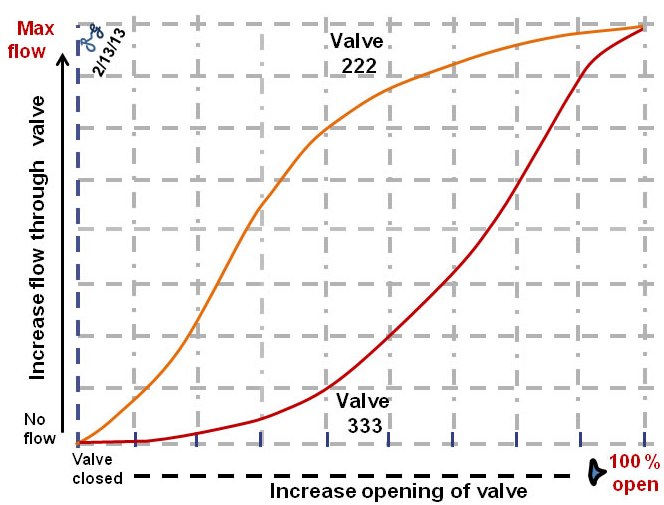
The technician installed the “U-Becth-Em V222. YES or NO.
Submit your answers under this blog post, or post it on www.fl-ate.org.
The technician installed the “U-Becth-Em V222. YES or NO.
Submit your answers under this blog post, or post it on www.fl-ate.org.
Indeed robots are everywhere, and there is a national as well as regional “push” to get students and the
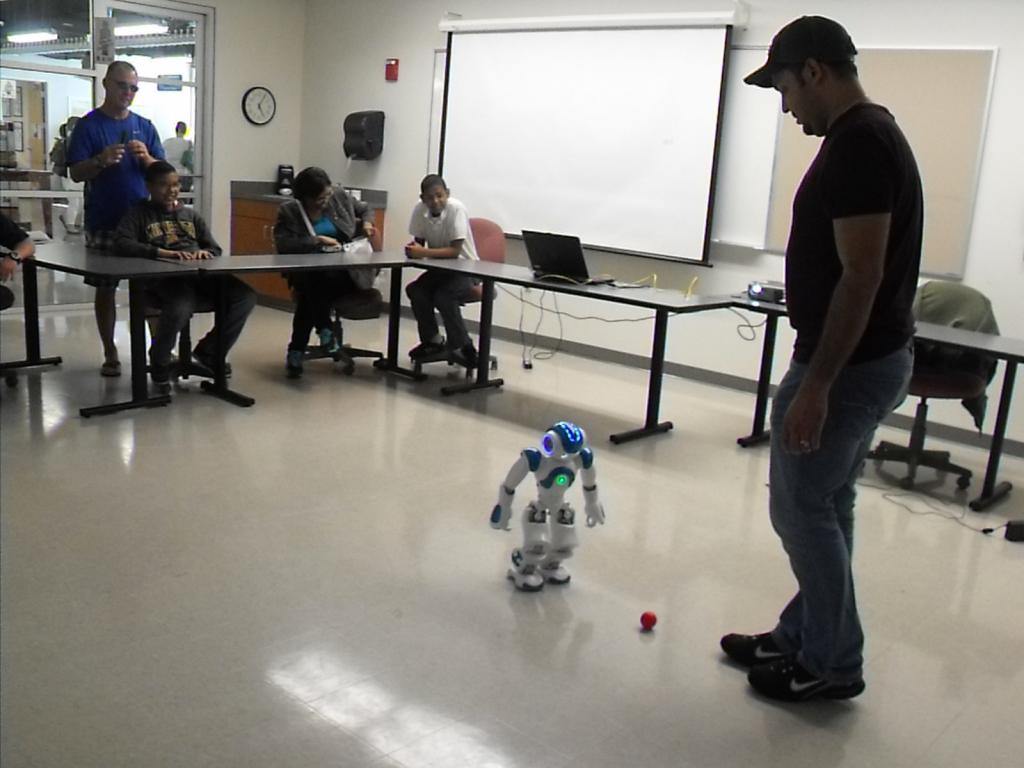
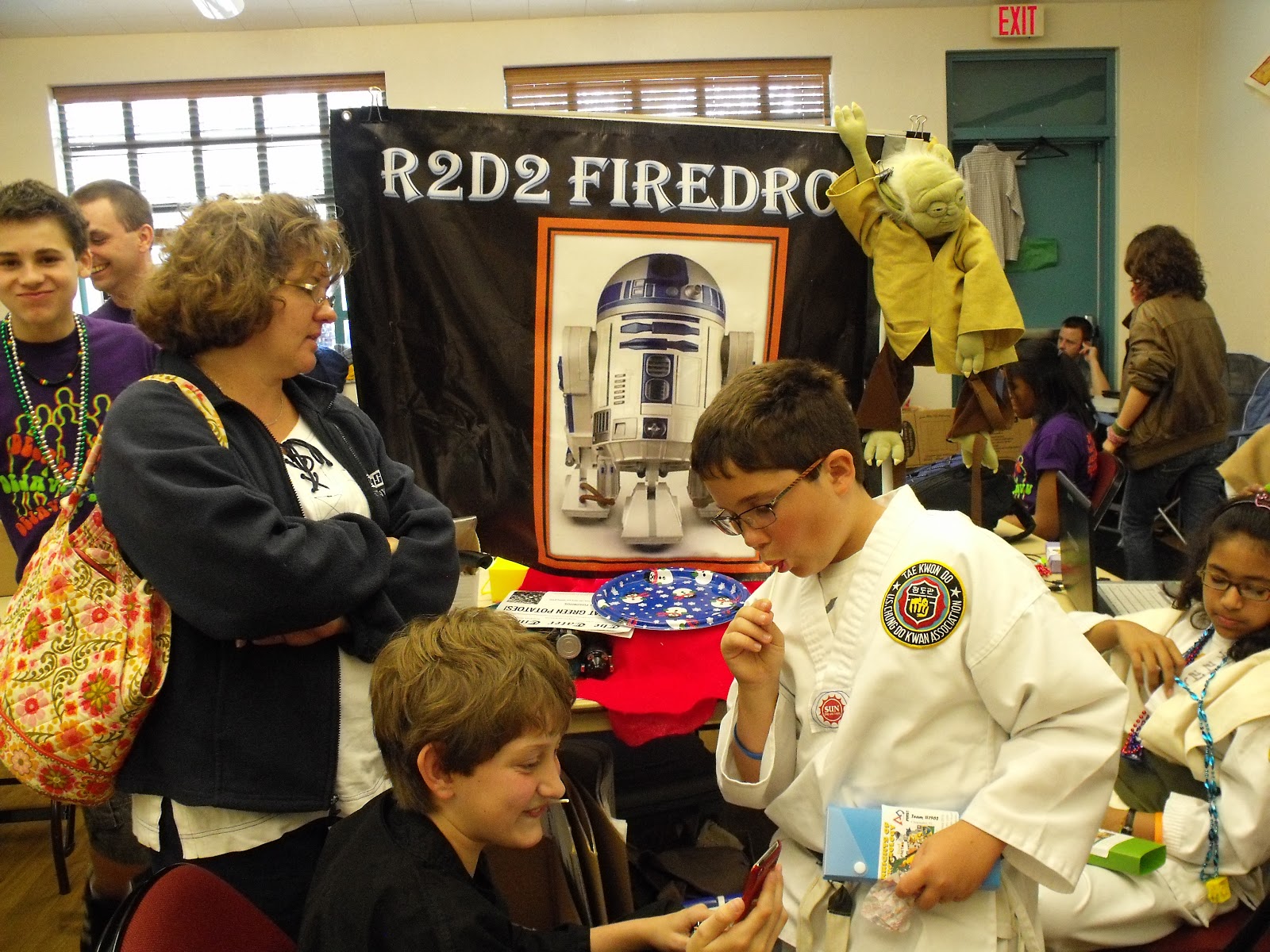
community at large engaged in STEM using robotics as a common platform. Given this trajectory in latest technological trends, FLATE—the National Science Foundation Center of Excellence in manufacturing at Hillsborough Community College—recently partnered with local engineering and robotics clubs in Tampa bay to celebrate national robotics week. The event was featured in National Robotics Week calendar, and showcased the various dimensions of robots and robotics technology at play. Robots project a fun side of engineering, says Juan Calderon, an electrical engineering student conducting research at the bio robotics lab at the University of South Florida in Tampa. Robots serve as a “hook” in helping steer students’ interest in science, technology, engineering and mathematics (STEM), said Juan. He, along with his fellow researcher, Johann another USF student who will also be serving as a robotics instructor at the FLATE robotics camps this summer, were in charge of the NAO robot—a humanoid robot—interactive demonstration at the robotics open house.
FLATE’s robotics open house served as a hotspot for STEM and robotics enthusiasts and brought students, educators, parents and industry professionals from across the Tampa bay region. Julia and Dillon
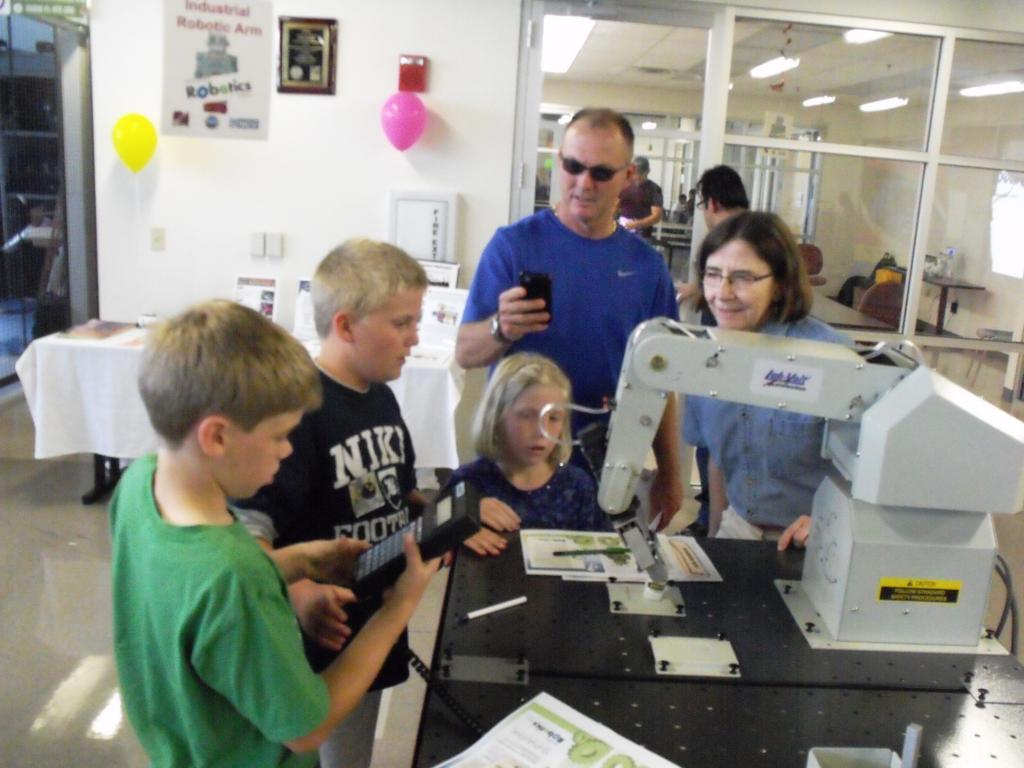
Perrigault-eng, were among those who were excited seeing the NAO robot in action. “Robots are cool” said Julia. Dillon who aspires to be an engineer says he loves robots as “they can be programmed to do anything humans want them to do.” Haven Rubellios and Mya Arong, 5th graders at Morgan Woods Elementary school were excited to see robotics at play. “We’re like little engineers building robots, problem solving, and working as a team” Mya and Haven tried their hand at the bottle touch challenge, and learned about rotations, speed and distance which they say will help while competing in regional robotics competition later in the year. Trey and Bradley share a similar opinion about robots. “I have always loved robots, and want to build one when I grow up” said Trey. Bradley and Trey who plan on attending FLATE’s robotics camp this summer says the open house gave them a chance to see how to build electric cars, their engines, and learned about 3D printers. The fun part of their day, they said, was watching the robotic arm, which according to Trey has real-world applications in terms of using for excavations and deep sea explorations.
The robotics open house was an educational experience, not only for first timers, but for returning campers like Colton Lewis. “Robots have always fascinated me. Programming is challenging but fun.” Colton who wishes to pursue a career in engineering for the military, has attended all of FLATE’s robotics introductory and advanced camp. He says the experience helped him understand advances in technology and the options that are available to him, and developed problem-solving and critical thinking skills which according to Colton are “keys to succeeding in STEM.” He is currently enrolled in FLATE’s high school camp this summer, and recently won the Florida state STEM fair competition.
In addition to the NAO robot demonstration, attendees also got to see first-hand use and integration of
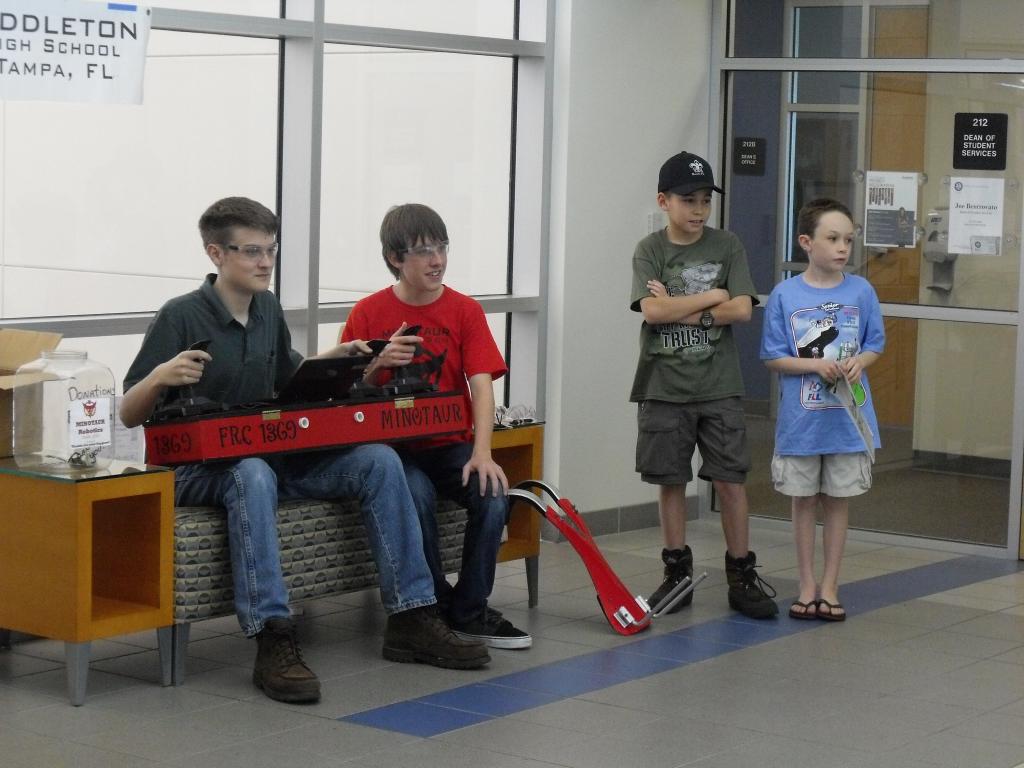
robotics/robotics software used by robotics FLL, FTC and FRC teams from local schools. Graham Peterson and Daniel Brown showcased the robot they built for the regional FIRST Robotics Competition (FRC). “We used a lot of industry level electronics to build the robot” said Graham. For programming, they used C++, for drive train they used a four, six wheel set-up. Each of the wheels had a roller on it, with a vector at 45 degree angles so they could effectively maneuver speed and direction.
Graham and Daniel, who are members of the robotics club at Middleton High School and have attended robotics camps from introductory through high school level camps, agree “technical skills are central to any engineering field.” Being part of a larger network of robotics teams have not only helped sharpen their understanding of electronics and programming, but have also helped them strategize and work effectively as a team. They hope their demo will inspire similar interests among fellow students attending the robotics open house to develop/sharpen their technical as well as leadership skills, and motivate them to join local/regional robotics team.
Not to leave parents and educators out, the robotics open house had much to offer to those on the
other side of the continuum. Kristy Long and Carissa Brady teachers at Morgan Woods elementary school in Tampa said the robotics open house gave them “insight into the possibilities,” and what they as educators can do with knowledge of robotics. “Exposure to these technologies equips students with the skills needed for the future workforce” said Kristy. “It develops critical thinking skills, and helps students’ understand real-world applications of what they are doing in class” Carissa said.
Fonda Moore, a career counselor for a local school in Tampa agrees STEM-focused jobs tend to pay higher salaries, and is currently in high demand for skilled/qualified professionals. Moore who was attending FLATE’s open house with her son Julian Moore applauds FLATE and HCC for making these resources and opportunities available to the local community students, educators and parents. STEM jobs are not so much hands-on, as they are minds-on, says Moore. “These jobs help students advance career wise, teaches them life skills as it keeps them stimulated and is the way of the future” Moore said.
For more information on FLATE’s robotics program, contact Dr. Marilyn Barger, executive director of FLATE at barger@fl-ate.org. To enroll in one of FLATE’s, STEMulating robotics camps this summer contact Desh Bagley, outreach manager at bagley@fl-ate.org, or visit www.madeinfolorida,org and www.fl-ate.org.
specific workforce needs. One long-term partner and supporter has been the Center of Excellence for Regenerative Health Biotechnology at the University of Florida (UF CERHB), which was instrumental in helping Hillsborough Community College (HCC) and other colleges, as well as K12 school districts, jump start biotechnology programs across the state. According to Dr. Marilyn Barger, executive director of FLATE, UF CERHB has provided curriculum and professional development for hundreds of educators across the state over the years. To enhance their support, UF CERHB stepped up to fill the gap by developing a blended assessment system for Florida schools that meets the state requirement for an aligned industry credential for CAPE (Career and Professional Education) academies.
UF CERHB through funding from Florida’s Department of Education’s, Division of Career and Adult Education, has developed an industry recognized exam to assess core skills and knowledge sets identified by industry, which are also represented within the standards of the secondary program and postsecondary introductory biotechnology courses. As an emerging and very diverse industry, a national certification does not exist. The exam serves as an assessment leading to a Florida industry-recognized credential, which is critical not only for added value to the secondary program and employment opportunities for students, but also to allow for appropriate FTE (full-time equivalent) funding to participating secondary schools under Florida’s CAPE act. In addition, students who successfully pass the exam with a score of 80%, or higher will be awarded the industry-recognized certificate as a “Bio technician Assistant” through UF CERHB, and will earn a minimum of three postsecondary credit hours toward an Associate of Science degree at the state colleges offering programs in biotechnology.
The instrument was developed to assess student understanding of core theoretical knowledge and practical
applications as outlined by industry (Banner Center for Biotechnology Needs Assessment and state-wide Focus Group Studies, 2007-2010). These have been delineated as “academic” and “performance” standards within the Florida Department of Education’s Career and Adult Education Manufacturing (secondary) frameworks of program number 8736000, which have also been aligned to the postsecondary frameworks of Introduction to Biotechnology, and the corresponding methods laboratory course. For the development process of the exam, these standards were aligned to corresponding test questions.
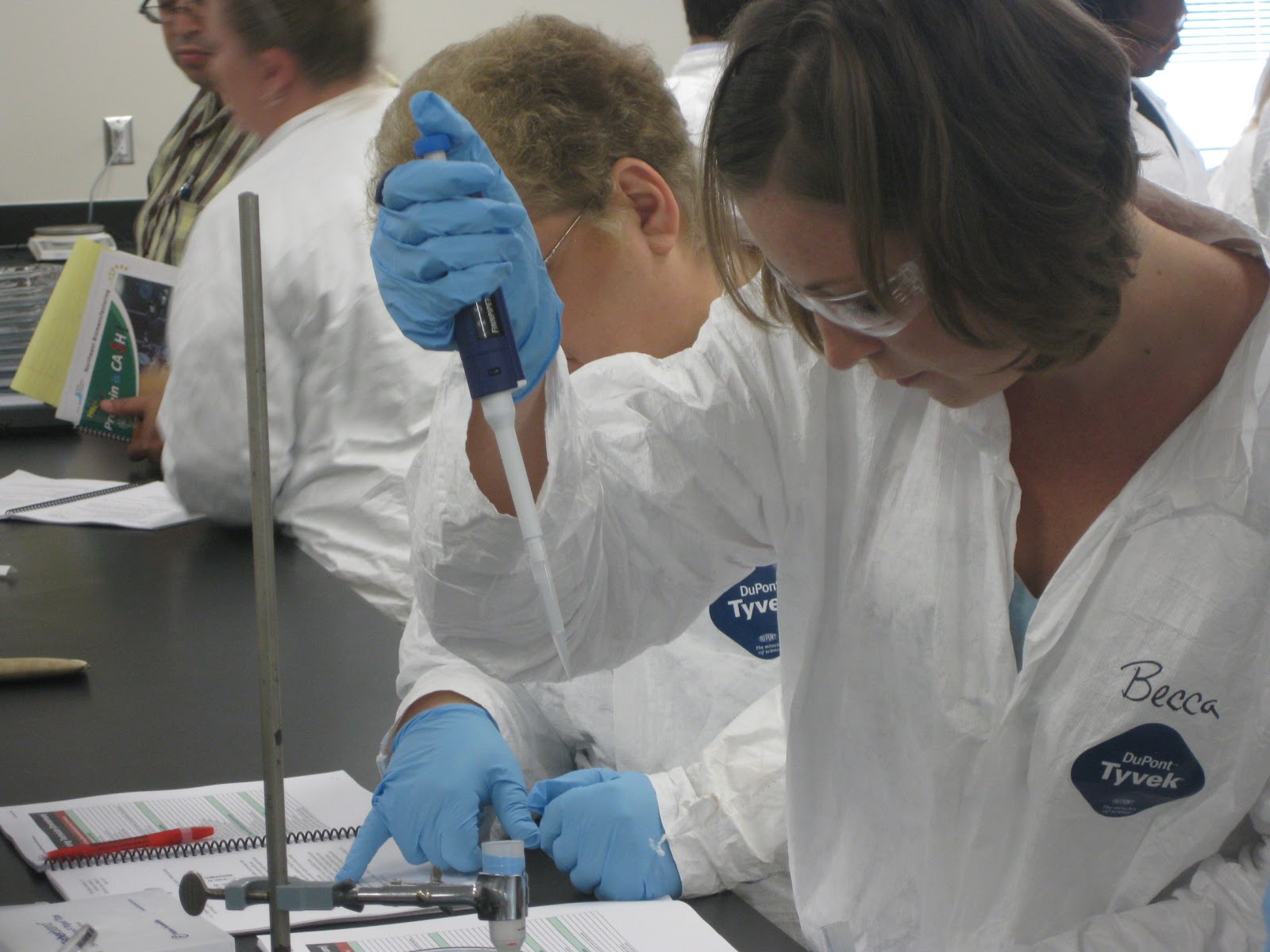
The exam consists of a written component (multiple choice, matching), as well as a practical component to assess mastery of equipment and techniques. Within the written portion of the test bank, the questions have been organized into question pools to allow for randomization of each individual test. The practical exam consists of 35 skills/techniques, with a corresponding rubric for mastery. A total of 100 points may be earned for each exam, with a cut score of 80% required for credentialing.
The exam has been vetted by the state’s industry organization BioFlorida, providing the state with an “industry-recognized” tool for awarding certification. BioFlorida committee members were presented the exam questions which were aligned with the corresponding course/industry standards. Committee members provided feedback on the scientific accuracy of individual questions, how well the exam questions align with the academic and performance standards, and overall thoughts on how well the exam and program reflect the knowledge and skill-base for core concept understanding and practical skills required for entry-level support positions in the industry.
The Biotechnician Assistant Credential was approved by Workforce Florida, Inc., and added to Florida’s Comprehensive Industry Certification List for the CAPE act beginning in the 2011/12 school year. The written (on-line) component of the exam is administered at UF CERHB approved testing sites via Cornerstone on Demand hosted by Intelladon. Access to the exam is controlled through the use of time-sensitive usernames and passwords assigned to approved test-site locations. The practical exam is also administered at UF CERHB approved testing sites, which must document the availability of required equipment, and qualified practical assessment proctor(s).
Participant registration, test-site registration, and proctor/practical assessment registration, documentation and instructions are available at the UF-CERHB website https://www.cerhb.ufl.edu/education-center, or contact Tamara Mandell at tmandell@cerhb.ufl.edu. For information on upcoming FLATE’s biotechnology summer camp for high school teachers in Florida visit www.fl-ate.org, or contact Dr. Marilyn Barger at barger@fl-ate.org.
FLATE’s energy camp is part of a network of energy camps being offered simultaneously at Tallahassee Community College, Florida State College at Jacksonville, and Brevard Community College. Nina Stokes, camp coordinator and project manager for FESC (Florida Energy Systems Consortium) says “the camps focus on fun, yet challenging, hands-on activities that enable students to make real-life connections to world of renewable energy technologies.” Stokes says “as the production of renewable energy continues to grow, camps like this help educate tomorrow’s citizens about issues that will directly impact them/their environment in the future.”strategies work? Who are the people who influence a new student’s decision? Last fall, the National Science Foundation Advanced Technological Education (ATE), National Center for Optics and Photonics Education (OP-TEC), set out to find out why students were enrolled in optics and photonics programs at partner institutions. Some of the findings outlined in the study were obvious, while others might surprise you, or keep you thinking.
Here is a brief summary of what they found. The survey was administered to 70 students from six partner colleges who had started the optics and/or photonics program that semester. Following the survey, the report revealed demographics of the group were 89% male with an average age of 27. The report also showed 80% were white and 9% were African American.
With respect to the participants completing high school mathematics and science courses, it was found over
70% had taken Algebra I, 60% had taken Algebra II, and 59% had taken Geometry. However, the participants over 30 years old were significantly less likely to have completed these same math courses. About half of all participants had completed chemistry with a lower percentage having completed physics, with the older students much less likely to have completed either. Moreover, 34% of the participants went to work after high school, 34% entered the optics/photonics/laser program in one of the participating colleges, and the remaining were in another educational program at a two, or four-year institution.
Survey questions were targeted to discover what the participants’ first exposure to the optics/photonics/laser
program was; who/what helped them make their final decision to enroll; and what did they plan to do when they completed the two-year degree. Survey participants were also asked what information was important in their final decision to enroll. The respondents were put into two equally sized groups, separated by the median age of 22. The report provides both aggregated data and response of the two age groups.
Parents were the most likely to help the younger group make their final decision to enroll. For the older group, 30% selected “other,” followed by 26% selecting their spouse as the person who helped make the final decision. Only 11% of this group reported parents as those influencing their final decision. Information from college recruiters influenced 68% of the younger age group, but only 32% of the older ones. The latter was also most likely to be influenced by information found in print and/or online sources. When asked why they entered the program, the survey participants overwhelmingly chose the optics/photonics/laser program for the solid employment opportunities, and/or their strong technical skills, and/or an interest in the discipline. Salaries, program length, instructor quality and financial aid/scholarships were all important to over half of the respondents.
More interesting details can be found in the breakdown between age groups, but you can explore those on your own along with closing recommendations at www.op-tec.org. There is a lot of information that our educational partners can use for most of our technical programs including the A.S. engineering technology degree and its certificates. Perhaps the most important information to be gleaned from the survey is that it is important to know who your students are, who helps them make decisions, what interventions work, what they want out of an educational program. Please contact Dan Hull (hull@op-tec.org) for additional information.
Shifting gears from the optics and photonics track, I invite you all to enjoy the Spring edition of the FLATE Focus which is bursting with exciting news about our line-up of upcoming robotics camps and workshops. I’d also like to call your attention to the amazing initiative led by Volusia Manufacturers Association, FLATE’s strategic regional partner, to highlight the robust manufacturing sector in Central Florida. As always try your hand at this month’s sTEm puzzle by comparing your answers to last month’s challenge, and make note of how local homeschoolers are sharpening their STEM skills through experiential learning. Before signing off, take in the colors of spring by traveling vicariously to south Florida where the largest manufacturer for Chrysanthemums in North America is located, and make a quick stop at the Florida Energy Systems Consortium website to get some fast fingered facts on Florida’s energy industry.
These and much more in this edition of the FLATE Focus. Enjoy!
events kick into top gear with national robotics week celebrations in April. The initiative reflects FLATE’s efforts in celebrating national robotics week and its role in recognizing robotics technology as a pillar of 21st century American innovation. In keeping with the theme, the overall idea is to “highlight the growing importance of robotics in a wide variety of areas, and emphasizes its ability to inspire technology education.” Desh Bagley, outreach manager for FLATE who also serves as a director for local tournaments and coach for FIRST robotics teams hopes to inform attendees about the types of robots that exist in the marketplace, and different functions they perform.” Through it all she also hopes to highlight FLATE’s mission in helping individuals understand high-tech manufacturing and how robots are a key player in making this happen.
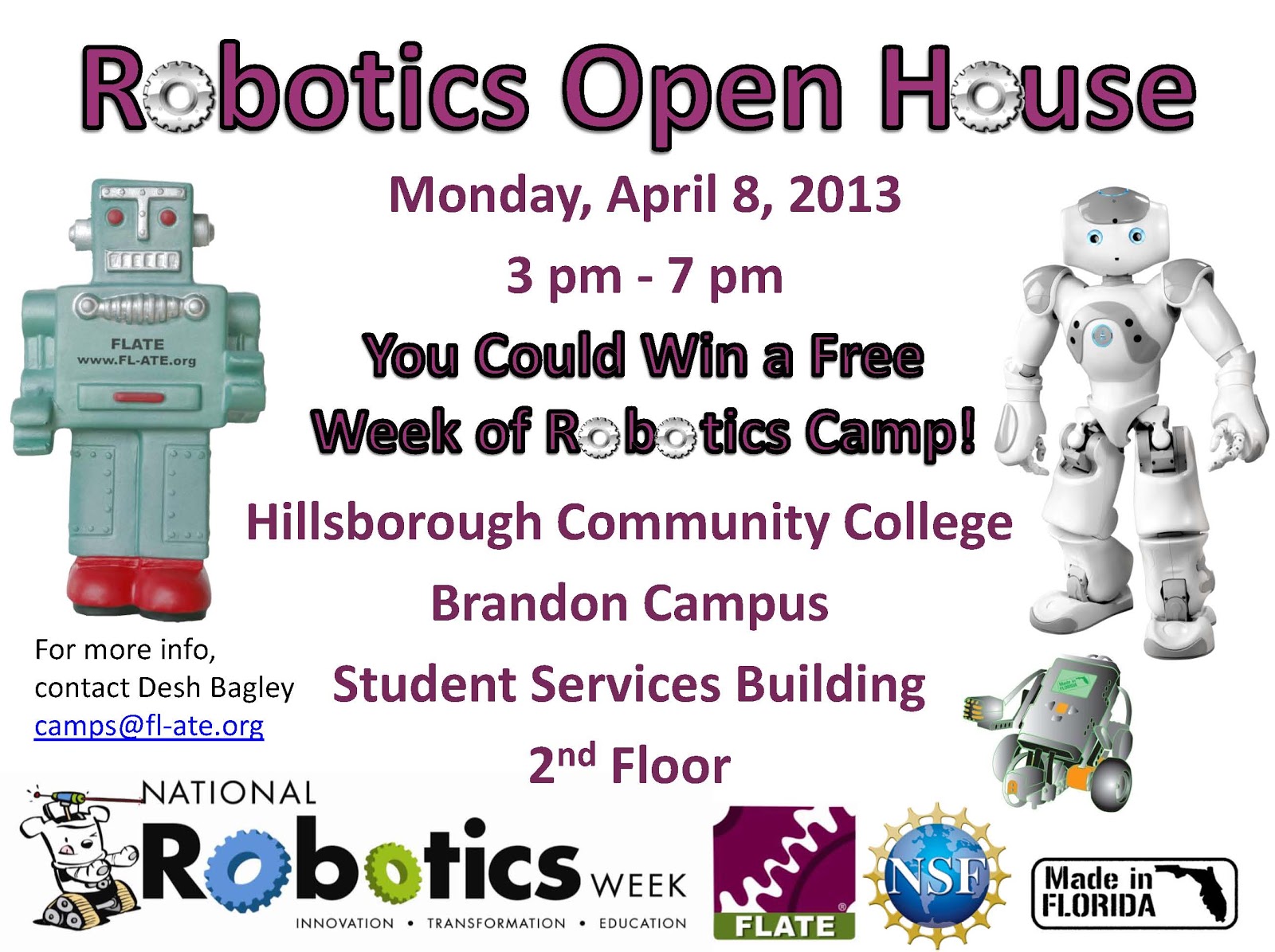
As part of this effort, FLATE is partnering with local engineering and robotics clubs in Tampa bay to showcase applications of robotics technology in industrial and everyday settings. Educators, students from all the five HCC campuses, or anyone interested in robotics and manufacturing, are invited to participate in this interactive event which will be held April 8 at HCC in Brandon from 3:00pm – 7:00pm.
Proposed list of activities include:
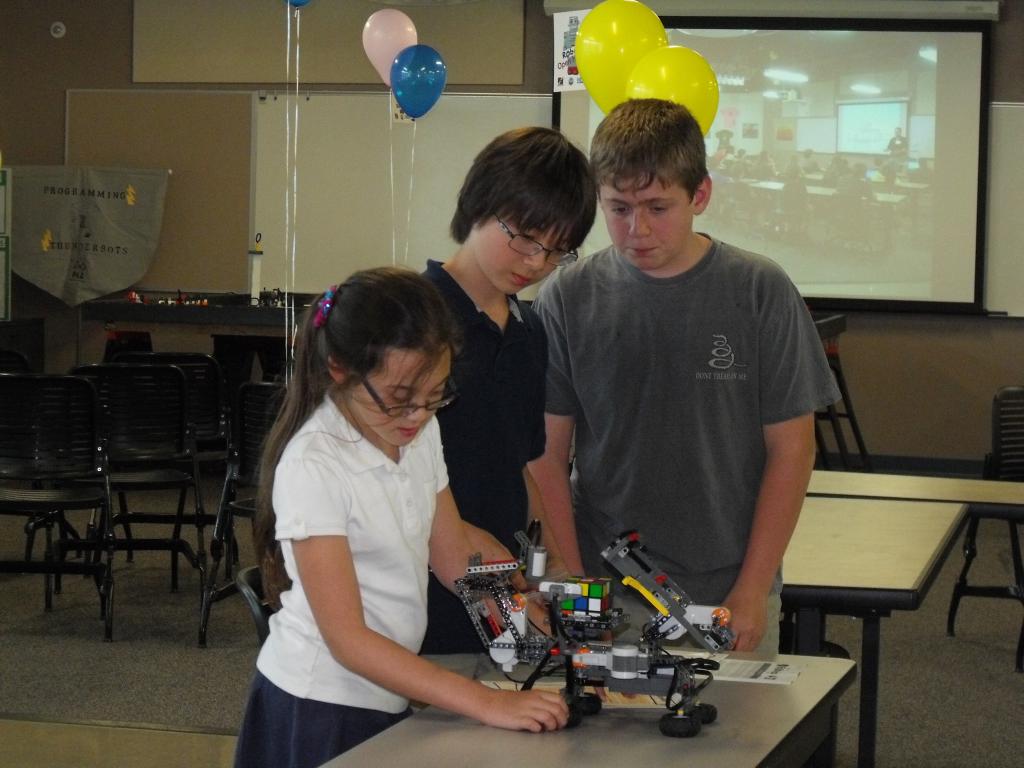
Techno Whizards, to compete at the regional FIRST Lego League (FLL) competition which was held March 2013 at the University of Central Florida in Orlando. The competition this year centered on connecting young people with senior citizens. The first part of the competition involved building the robot. The second component involved conducting in-depth research. As part of the competition, team members were asked to talk to seniors over 65 years old, find out the kinds of challenges they face in everyday life, and then come up with a solution using robots to address these challenges. Solutions could involve manufacturing solutions, medical solutions, or it could be as simple as developing social communications solutions.
Programming Thunderbots invented a robotic pet, named Dr. Pup, for senior citizens that could monitor
health stats and offer companionship. Techno Whizards on the other hand invented a “smart stove” for senior citizens who may forget to turn off the stovetop burners. The “Techno Stove” had pressure sensitive burners that were programmed to signal the relays/contactors in the stove if the burners were on for too long. The stoves were also programmed to call a monitoring service to alert a loved one, or paramedics if the senior citizen does not respond to the beeps and alarms from the stove.
Each team was given 2.5 minutes to complete challenges on a standard robot field. The challenges involved using engineering, programming and STEM-related skills, as well as team work to get to the next step of the competition. The team(s) that demonstrated the best ideas and solutions qualified to compete in the global FLL competition. Only one team from Florida qualified for the global competition this year which will be held in April 2013 in St. Louis, MO.
Through it all, teams gained in-depth knowledge of STEM in a hands-on, problem-based learning
environment. They developed a deeper understanding of these concepts and their relevance in everyday activities. Working together within a team environment and choosing the best ideas and solutions to advance to the next level of the competition also sharpened their teamwork skills. The challenge also introduced team members to societal problems that they would never know, or understand, “much less take a step further and find a life-long, permanent solution.”
For more information on National Robotics Week, or FLATE’s robotics program for middle and high school students visit www.fl-ate.org and www.madeinflorida.org, or contact Dr. Marilyn Barger at barger@fl-ate.org. To enroll in one of FLATE’s summer robotics camps starting in June 2013, or be part of FLL, FRC and FTC teams contact Desh Bagley at bagley@fl-ate.org.
Discussion
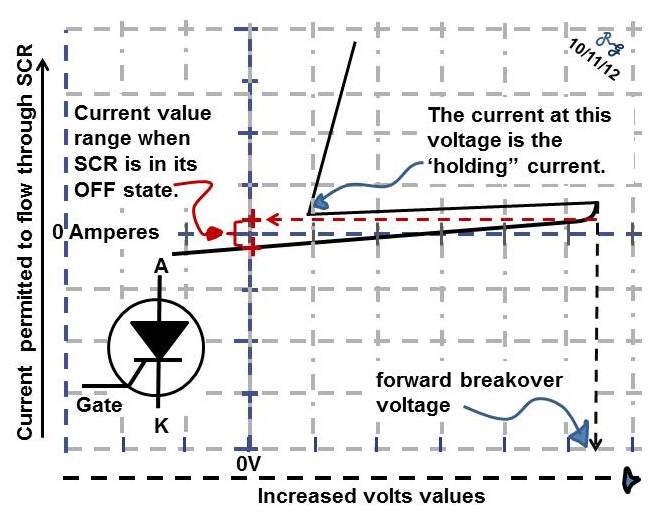
The technician’s examination of the voltage, current data from the SCR is straight forward. Following the
voltage values as they increase from left to right show the expected low current values when the SCR is OFF. The forward breakover voltage value is the voltage value as the current values take a quick upturn. At this voltage value, the SRC turns ON and voltage cascades back to a low value that corresponds to the holding current. Since the plotted data corresponds to the exact expectations for a properly operating SCR , the tech does not have to replace this circuit. The conversation with students can be expanded to explain the rest of the details on the operation of the SCR.
Under normal operation, the voltage applied across the anode and the cathode will be less than the forward breakover point. If a positive voltage is applied at the gate it causes the gate current to increase. The more the gate current, the lower the point at which forward breakover will occur. Once ON, the SCR stays ON and permits high current through the device. The SCR will turn off when the current between “A” and “K” is lowered below the “holding” current.
Solution
The SCR circuit the technician tested is not functioning properly and it needs to be replaced. NO
Science Foundation Center for high-tech manufacturing is partnering with Hillsborough Community College (HCC), the School District of Hillsborough County and local manufacturers to offer several robotics camps this summer. The camps are in the student services building at HCC’s Brandon campus, and are designed to enhance campers’ skills needed to succeed in manufacturing, robotics and other STEM related careers. Cost for each, week-long camp is $150.
Schedule and list of camp offerings include:
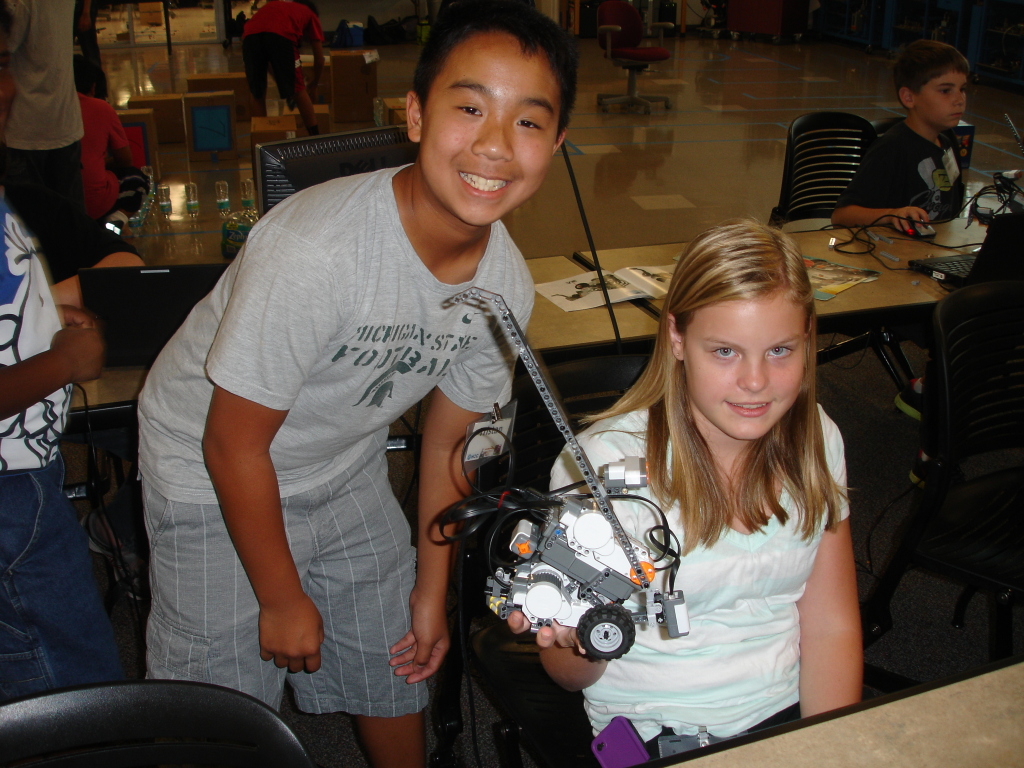
Curriculum for all the camps comprises of a mixture of Lego® educational materials that are integrated with Science, Technology, Engineering, Mathematics (STEM) subjects and modern manufacturing, and are conducted in a competitive problem-solving environment. Campers will tour various local high-tech manufacturing facilities, and develop increased problem-solving skills, critical thinking skills, and teamwork and communications strategies. To register for the camps visit www.fl-ate.org/projects/camps.html, and www.madeinflorida.org. You can also contact Desh Bagley at camps@fl-ate.org.
Pictures from 2012 Camps
(located between Fort Myers and Belle Glade, FL) is a manufacturing facility that annually produces 186 million copies (that’s 1.86 x10⁶ for those of you into scientific notation) of the essential component that supports an entire North American industry sector. If that number isn’t impressive enough, this firm can increase productivity to as many as 225 million parts if called on to do so and this production schedule is handled with less than 600 employees.
Who’s the manufacturer and what’s the product? Presumably you have already guessed that product is
mums; but perhaps you didn’t know that the manufacturer is Syngenta Flowers, Inc. and their Florida operation is responsible for 100% of the potted Chrysanthemums in North America and 80% of the garden variety. Syngenta acquired this operation from the Yoder brothers, long time mums and aster growers from Fort Myers with name recognition powerful enough that Syngenta, an international corporation, retained the Yoder brand for its mums.
Despite all of the tools and technologies available in today’s high-tech world of agriculture, how can one farm at one location be the source for all of the potted chrysanthemums (remember that’s well over a million pots) in all of North America? OK, we have been a bit deceptive. The facility does not produce all of the potted chrysanthemums you can buy, it produces all of the “sticks,” or plugs that the commercial growers use to produce pots of these colorful plants.
Why is a flower, gorgeous as they may be, getting this attention in the FLATE Focus? That’s an easy
question to answer! Starting with a “Made in Florida” industry tour, FLATE is helping the middle and high schools in Belle Glade, FL, develop a partnership with the Syngenta’s Alva facility. The goal is to make these students aware of the STEM connections within this manufacturing facility. One of the most effective methods for accomplishing this is to bring students to Syngenta to see first-hand what goes on “down on the 21st century farm.”
The first of these visits occurred two weeks ago, as Syngenta was gearing up for the summer/fall mums season. FLATE provided the logistics and transportation support for 25 students from Labelle Middle School and six students from Edison Collegiate High School in Fort Myers to have an extensive tour of the Syngenta operations. The visit could be characterized as a riding tour on the back of open air trucks. Tour guides made stops along the way that were chalk full of high-tech operations. In fact, the tour was framed by visits to controlled environments.
At the start, students were introduced to a clean room, a half-acre long, that could only be entered after
gowning procedures typical of a semiconductor facility with the addition of operating room style hand washing protocols to protect the premium seed stocks stored and germinated within the faculty. The tour ended within a cold room facility (35 degrees F) where the fully grown (less than 2 inches) product is packaged and warehoused pending distribution throughout North America.
So, the next time you buy a potted chrysanthemum from a grower near you, remember that the plant actually started its trip to your home near the everglades where the sun and soil help another “Made in Florida” product bring beauty and wonder into your life.
For more information on the FLATE-led Made in Florida outreach campaign, or to schedule a tour for students in your region contact Dr. Marilyn Barger at barger@fl-ate.org, or visit www.madeinflorida.org.
Terms of Use | Privacy Statement