


contributed by Polygon Solutions
Polygon Solutions Inc., one of FLATE’s industry partners in Fort Myers, FL, is a manufacturer of rotary broach tools for the precision machining industry focused on medical and aerospace parts. Polygon first entered the rotary broach market with an award winning tool holder, and continues to innovate with new tooling for manufacturing hexagon and six-lobe forms in titanium bone screws. These new tools were featured at the recent plant tour for the Southwest Regional Manufacturers Association (SRMA).
Polygon’s advancements with rotary broach technology have continued with a new Micro size rotary broach holder for machining small shapes using Swiss type CNC machines and lathes. The innovative design of the tool holders includes sealed bearings for easy maintenance and pressure relief holes for smoother machining operations. However, the main interest of this year’s tour was the broaches used for machining Titanium fasteners and bone screws.
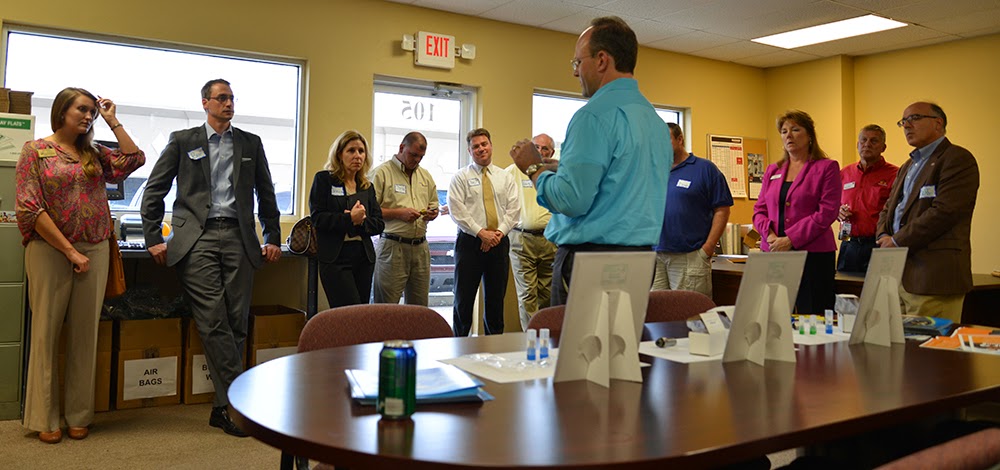 Polygon has been making the cutters out of high speed steel, a very hard substrate that resists wear and chipping. The company currently offers M-2, M-42, PM M-4 and PM T-15 varieties for machining different materials. Peter Bagwell, a Product Engineer for the company, was asked about which materials are used for broaching bone screws, and explained how the choice of substrate material depends on the method of broaching. Bagwell also talked about a new rotary broach material the company is researching.
The demand for rotary broach tools is growing as more exotic materials are being used to make innovative aerospace and medical device fasteners. Polygon is working with bone screw manufacturers to help them choose the right method of broaching in addition to the selecting the right tools. Polygon specializes in standard hexalobular (or Torx-type) rotary broaches in addition to custom shapes and sizes. The six-lobe ISO standard hexalobular form is currently the most popular.
Polygon Solutions has hosted an open house with the SRMA for two years in a row, and was one of the
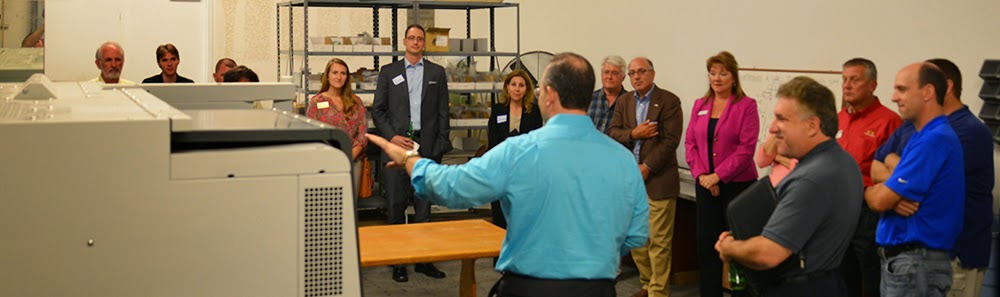
industry tour hosted for the manufacturing day in Florida tours organized by FLATE in 2013. “We value the partnership with our local customers and suppliers and are happy to bring them in and show them what we’re offering,” says Bagwell. We also maintain healthy relationships with other organizations like the Precision Machined Products Association (PMPA) and the National Tooling and Machining Association (NTMA). The company believes participation in each of these networks is key to remaining the leader in rotary broach technology.
Polygon is a newer member to the SRMA, which boasts a wide variety of manufacturing business. “Many people move here and move their businesses her due to the great lifestyle Southwest Florida has to offer,” says Bagwell. “However, the exposure to the growing number of innovative medical and aerospace companies is really making it an attractive place for all manufacturers.”
For more information on Polygon visit https://www.polygonsolutions.com, or contact Peter Bagwell, rotory broach product engineer at peter@polygonsolutions.com, or 239.628.4800. For information on FLATE, or to host/organize a tour for Manufacturing Day in Florida on Oct. 3, 2014 visit www.madeinflorida.org/manufacturingday.
 Earlier this month President Obama announced additional funding opportunities from the Department of Labor for Community Colleges under the TAACCCT program (Trade Adjustment Assistance Community College and Career Training) and separately, additional funding for apprenticeship programs. The second, $100,000,000 will be awarded later this year from H1-B funds for American Apprenticeship Grants. Apprenticeships are a proven path to employment and the middle class: 87% of apprentices are employed after completing their programs with an average starting wage for completers of over $50,000. The program will support several innovative projects that include: scale in-demand job training across the country through national industry partnerships; advance education & training to ensure seamless progressions, and improve statewide employment and education data integration and use.
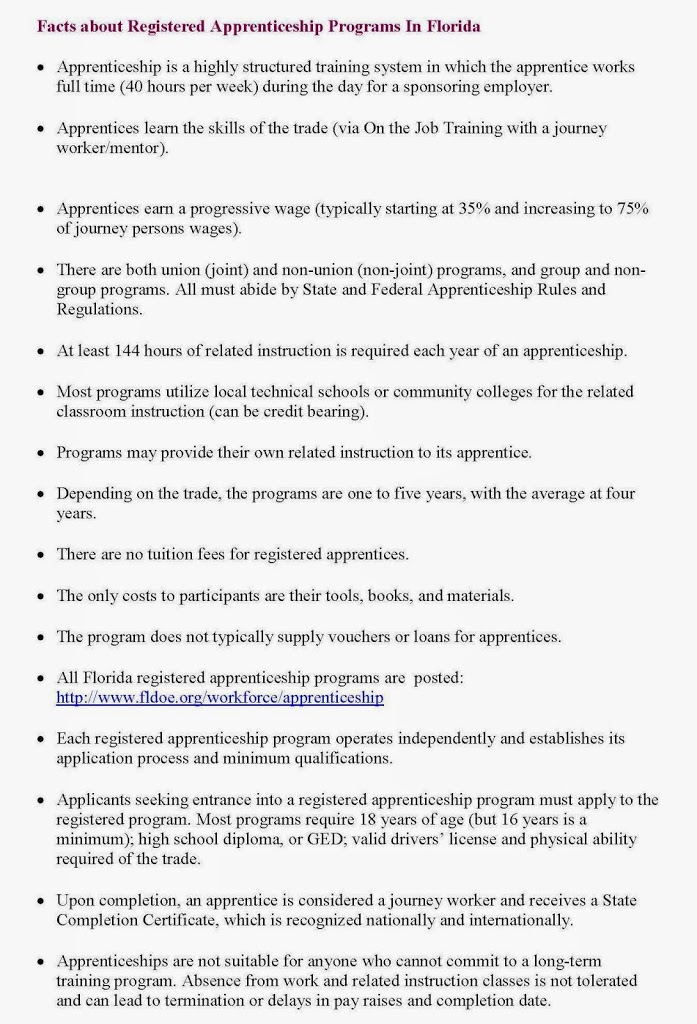
 There is still a lot of confusion about apprenticeship programs and how they work. We addressed the topic
last year in the series “Defining Workable Education Models” where we took a close look at the terms of engagement for apprenticeship programs. What many Florida manufacturers do know (or think they know) is that apprenticeship programs can produce many qualified workers that they need in various technical manufacturing and industrial areas. What they might not know is that most apprenticeship programs are primarily run by (or registered to) a company. Detailed information about apprenticeship programs in Florida can be found at the Florida Department of Education website at www.fldoe.org/workforce/apprenticeship.
 |
| Click to Enlarge Image |
Alternative to these very structured apprentice programs, there are many new co-operative (work-study) systems being implemented across the country. They are not true apprenticeship programs. They are innovative co-op programs in two-year programs that are providing consistent, monitored work experience integrated with specially designed academic degree programs. These programs provide many of the advantages of registered apprenticeships with a different mix of academic and technical courses and work experience. The programs typically run cohorts of students, and provide paid part-time and/or full-time work. Students graduate with an associate degree in a technical discipline and will have worked 20-40 hours per week in an industry related position with mentoring at the employer when they graduate. These programs still require significant commitment by the companies. Employers commit to helping design the coursework; providing monitored OJT work experiences; and paying the students for their work during the 2-year program.
There are currently several of these programs being put into place by large automotive manufacturers across the U.S. Their objectives are to prepare a workforce of multi-skilled production technicians. In some regions, consortia of companies are developing these programs with each employer committing to support one, or more students. In these cases, the consortia members work together to define the college curricula and agree on similar work experiences for the students. This new “co-op” model for technical and community college workforce programs should help fill the workforce gap for manufacturing companies in Florida. We should keep our eyes on these programs and how they are working for industry and educators, and consider adopting and/or adapting this model in Florida.
I invite you to continue this discussion here on this blog and/or across our social media platforms. A special congratulations to all the A.S.E.T graduates in Florida. In keeping with the “cap and gown” theme, we bring you a story that includes data byte on graduates from the consortia of engineering technology programs across Florida. We also have a new sTEm puzzle to tickle your STEMtastic skills, a recap of FLATE’s engagement with national robotics day activities, and a first-hand account from an Albert Einstein fellow and his efforts to help educators across Florida implement the “T” and “E” pieces of STEM.
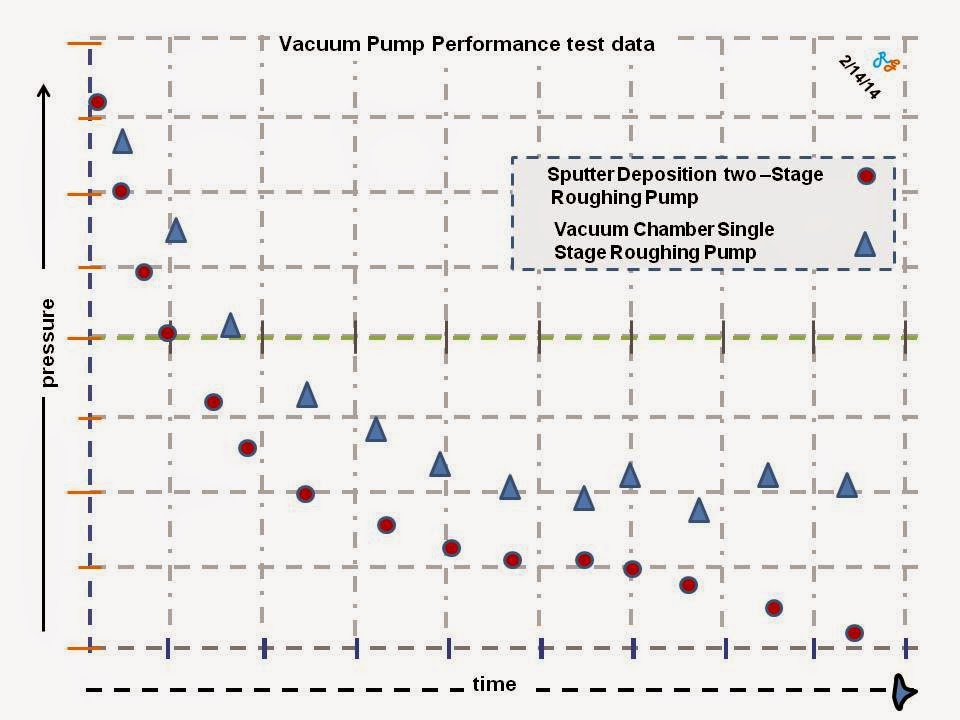
As established in the previous puzzle, the Tech knew that two-stage pumps can reach a lower pressure value and thus her suspicion that the plots were mislabeled was correct. The graphic below reflects that correction. Now attention can shift to the additional message presented in the plots below.
As indicated in Puzzle 39, the technician also understands the concepts of “outgassing” (a vacuum system is “outgassing” when the vacuum pump is “pulling” gas molecules from the materials in the vacuum chamber) and an actual vacuum chamber leak (a vacuum system is “pulling” gas molecules from outside the vacuum chamber into the vacuum chamber). After measuring the values for current drawn through and voltage drop across the motor of the single stage pump, the tech determined that the single stage pump is operating within manufacturer’s specifications.
The Tech now knows that the vacuum system is “outgassing”. Yes or No. Submit your answers below the blog post, or at www.fl-ate.org.
It is that time of the year when colleges across the state are readying for cap and gown ceremonies. There is much to celebrate! The graduating class of 2014, from the consortium of colleges across Florida offering the A.S. degree in Engineering Technology (A.S.E.T) shows a steady rise in the number of state and colleges adopting the ET degree program, healthy enrollment numbers in engineering technology, and reflects an increase in the number of A.S.E.T graduates across the state.
 A five-year trend in engineering technology program enrollment shows highest enrollment at Eastern Florida State College (EFSC) followed by Florida State College in Jacksonville (FSCJ), Hillsborough Community College (HCC), and St. Petersburg College (SPC). In 2013, twenty A.S.E.T (13 male, 7 female) graduates and 30 (23 male, 7 female) who earned College Credit Certificates (CCC) from EFSC. The projected numbers for May 2014 at EFSC are expected to be five A.S.E.T graduates (4 male, 1 female) and 11 CCC earners (7 male, 4 female). Elsewhere around the state, Gulf Coast State College had a total of 10 A.S.E.T graduates and 24 CCC earners in the 2013-2014 academic year. In the northeast tip of the state, Florida State College at Jacksonville (FSCJ) is expected to have nine graduates and 18 CCC earners this year. “That number is expected to rise significantly over the next couple of years” said Ernie Friend, director of Academic Systems at FSCJ.
 Closer to home, there were seven graduates (all male) and 61 CCC holders (49 males, 12 females) from St.
Petersburg College. State College of Florida, Manatee-Sarasota (SCF) had equally impressive numbers with 23 awards among nine students (7 males, 2 females). Six males and two females received the A.S.E.T degree.These eight students, joined by a seventh male, received a total of 15 CCC awards. The two females receiving the associate degrees earned three of the 15 certificates. Hillsborough Community College had four graduates (all male) and eight CCC (7 males, one female) holders in the past academic year, while Florida Gateway College currently has six students enrolled in the A.S.E.T degree with three expecting to graduate in 2014-2015.
Indeed, according to statewide data collected by FLATE, the ET degree program exhibits consistent, positive growth over a five year period. A.S.E.T program enrollment increased from 145 in 2008, to 1,109 in 2013. Percentage of minorities enrolled in ET technology programs nearly doubled from 22% in 2008 to 41% in 2013. ET College Credit Certificate enrollment also rose from 90 to 145 in the last five years with engineering technology support specialist CCC topping the list with 122 enrollments. In terms of ET graduates, A.S.E.T degree completions rose from 7 in 2008 to 83 in 2013.
The A.S.E.T degree has been adopted by 14 of Florida’s 28 state and community colleges. The degree
conceived, engineered, and coordinated by FLATE is the first program of its kind. Core courses align with the Manufacturing Skills Standard Council (MSSC) certification, and provide for an articulation agreement of 15 credit hours. Colleges continue to “self-align,” and three more colleges are expected to add the ET program in 2014.
Given the spike in enrollment and graduation numbers, FLATE has also started an initiative to create a


common communication platform on LinkedIn to reach out to engineering technology graduates, educators, industry professionals across the state. FLATE is also working towards developing a mobile ET site. Stay tuned for these latest updates, or visit https://madeinflorida.org/e-t-alumni and join this exclusive ET network. You can also contact Dr. Marilyn Barger, executive director of FLATE at barger@fl-ate.orgfor more information, updates, networking and partnering opportunities.
Written by Steve Portz, STEM Educator & Albert Einstein Distinguished Fellow
Our family’s move from Cocoa, Florida to Washington D.C., has felt equivalent to a move to a foreign country. There has been an enormous learning curve with respect to negotiating city life, interfacing with a highly educated professional community, dealing with the glacier pace and inefficiencies of government organizations; and, I won’t even begin to talk about the record levels of snow that we have been fortunate to experience this year in Northern Virginia.
Our family’s move from Cocoa, Florida to Washington D.C., has felt equivalent to a move to a foreign country. There has been an enormous learning curve with respect to negotiating city life, interfacing with a highly educated professional community, dealing with the glacier pace and inefficiencies of government organizations; and, I won’t even begin to talk about the record levels of snow that we have been fortunate to experience this year in Northern Virginia.
At the same time it has been simply amazing. Having access to all of the educational meetings and
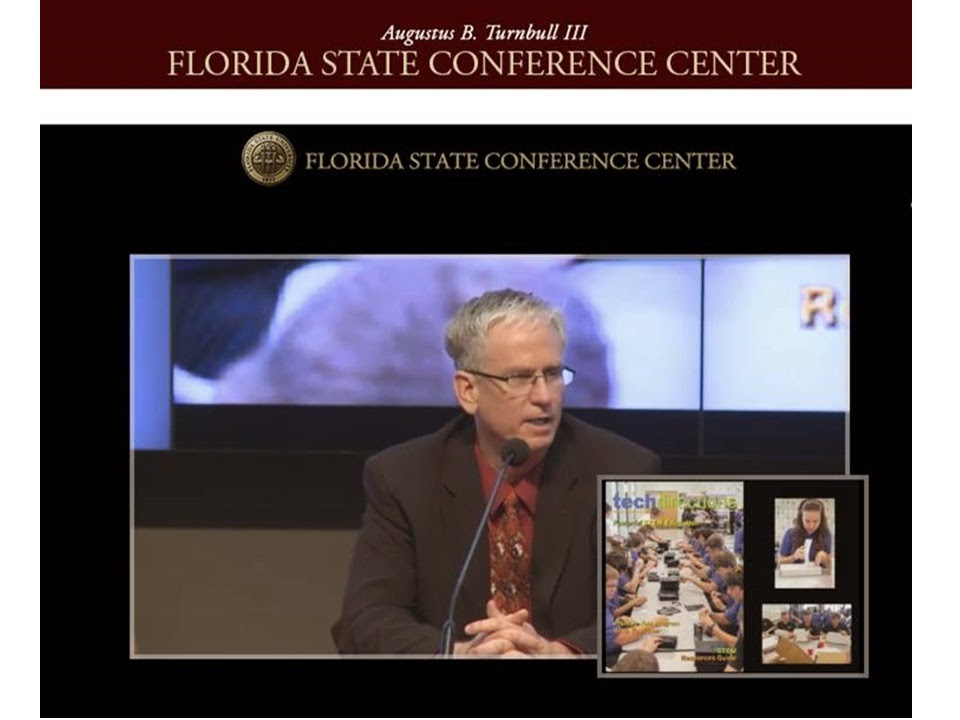
conferences in DC, hearings on Capitol Hill, research being sponsored by the National Science Foundation (NSF), meeting and learning directly from principal investigators, sitting in on panels, touring scientific and government institutions, and participating in educational policy discussions have all been very heady. My placement at NSF is with the Computer and Information Science and Engineering Directorate (CISE). This directorate is responsible for everything from supercomputers at national laboratories, to combating cybersecurity threats, to promoting computer science education and broadening the participation of underrepresented populations, to how to make air travel and medical devices safer. NSF is not laboratory as many might think, but a granting organization with about an 8 billion dollar annual budget.
A purpose of NSF, as I see it, is to strategically develop a vision for research pathways based on input
from the leading scientists in our country. They then solicit research proposals, use the merit review process – again using the leaders in the scientific community – to determine what research ideas should be funded, and then they fund, track, and report on the findings of that research. Many breakthrough science and engineering activities can be traced directly back to NSF grants. Prior to having this experience in Washington D.C., I had noted with interest that some of my most worthwhile professional development had been with funding from the NSF.
As part of the Einstein Fellowship, each fellow is required to develop goals for the year and a personal professional development plan. Some of my goals have been to strengthen my abilities as a leader in STEM, particularly as it applies to engineering education. Since many in education have really struggled with how to implement the “T” and “E” pieces of the STEM acronym, I have taken a special interest in teaching and publishing strategies to help educators understand and help facilitate this effort. As a result, I have had six journal papers published and will have presented in four conferences.
What has been my biggest takeaway? What would I emphasize if I were in the class today? Besides
the essential integration of STEM in the curriculum and helping our academic counterparts better understand how to do this, I would work to promote advanced manufacturing in our CTE programs. Desktop manufacturing, 3D CAD, and open source electronics are rapidly changing the world we live in. In order for our students to be successful, we need to revolutionize our educational purpose and mindset away from that of helping students become job seekers, to helping our students become entrepreneurs and job creators. Perhaps the best way to prepare our students is by borrowing from the field of industrial design, teaching the principles and skills of industrial designers and empowering them to create innovative products on their own. That to me is the wave of the future.
Footnote:
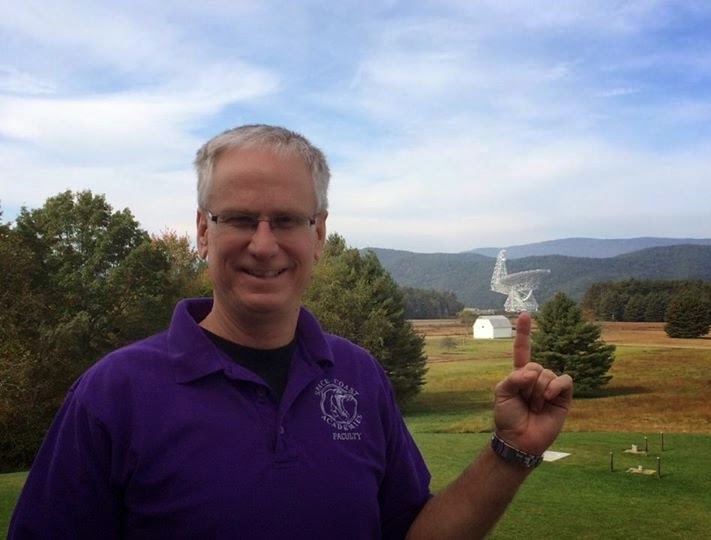
Steve Portz was winner of the FLATE Secondary Educator Award in 2012. You can read more about him in the feature FLATE Focus article highlighting more of his accolades and efforts to promote technology education in Florida. Upon completing his fellowship, Portz plans to return to Brevard County, FL and continue teaching. He hopes to use his fellowship experience to affect positive change as a STEM education specialist by serving as the lead contact for all STEM initiatives for his school district ensuring curriculum is current and relevant. Portz is looking to promote STEM by establishing a district-wide “Make–Habit of the Mind” empowering students to create, build and transform ideas into products. He will also serve as the district point person on additive manufacturing while providing leadership and training on how to integrate 3D printing technologies into the curriculum. Given his STEM-focused interest, Portz hopes to capture and retain students’ interest in STEM at earlier ages and broaden participation of underrepresented populations.
·
You can connect with Portz at Sportz.einsteinfellow@gmail.com. For information on the FLATE Awards, or to nominate an awardee visit https://fl-ate.org/projects/awards.html, or contact Dr. Marilyn Barger, executive director of FLATE at barger@fl-ate.org.
National Robotics Week in Florida was celebrated with much gusto. FLATE took a leading role in hosting a
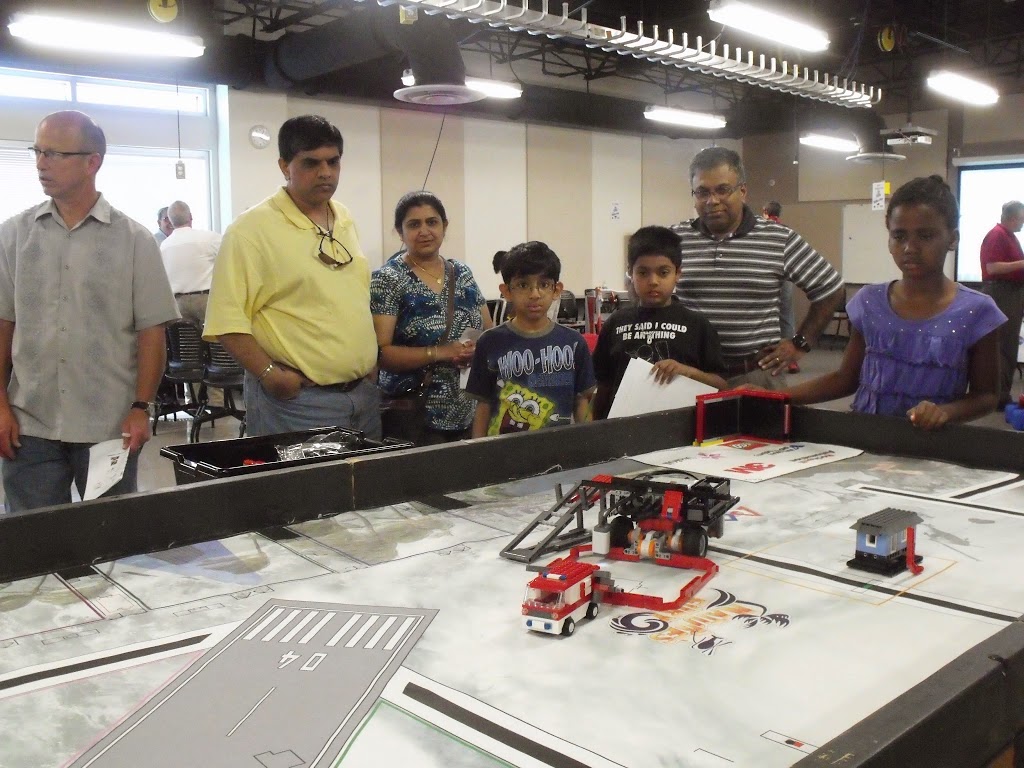
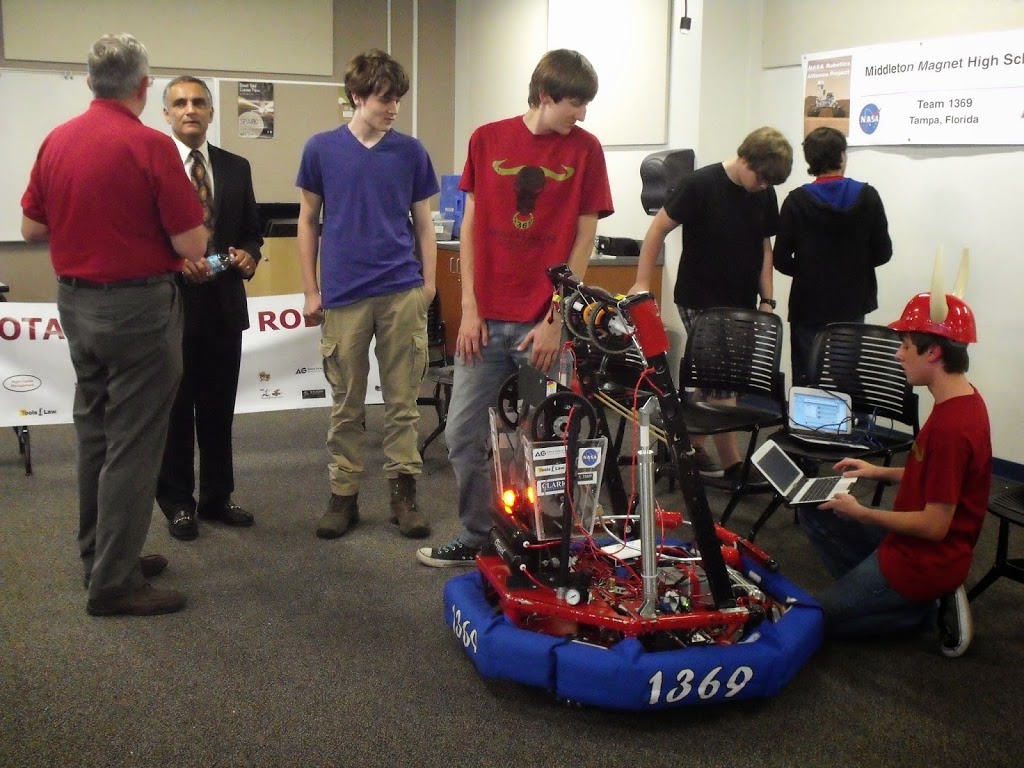
region-wide open house, inviting educators, industry leaders, students and anyone interested in robotics, to attend and celebrate national robotics week in Tampa. As part of this effort, FLATE partnered with local robotics clubs to showcase applications of robotics technology in industrial and everyday settings. “The educational component of robotics represents true project based learning, and is tied to so many other aspects of everyday life” said Amanda Peterson. She and her son, Graham Peterson were attending the open house as part of Middleton High School robotics team who were there to showcase their FRC robots to visitors.
During the open house, visitors got a close-up look at robots, how they are being used in industrial and
everyday settings, and got a first-hand look at various software used by VEX, FLL, FTC and FRC team
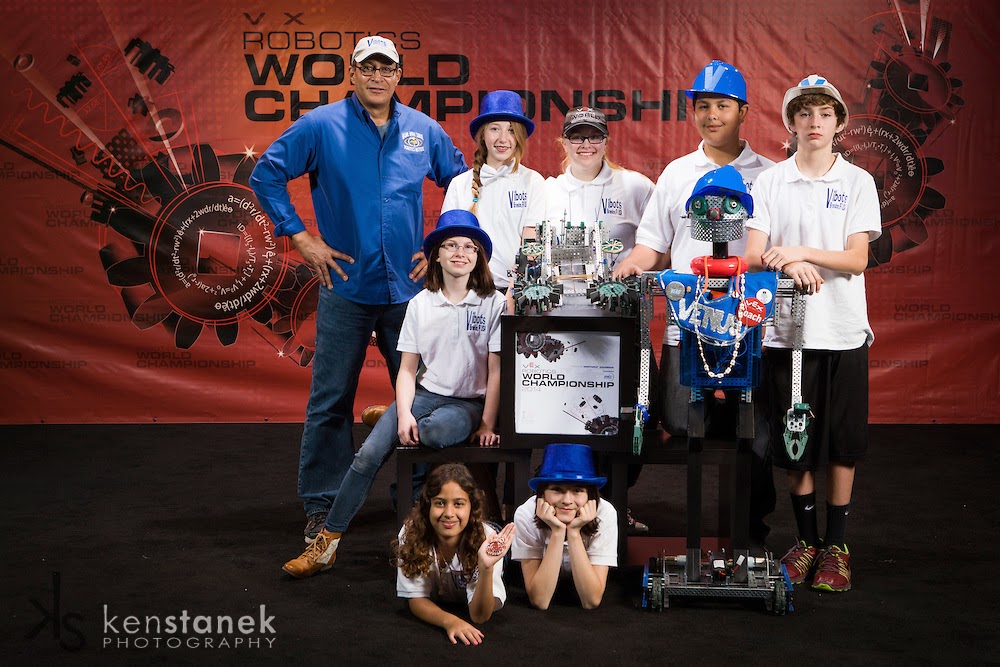
members to operate and program robots while competing at regional and national robotics competitions. The Vibots—an “All Girls” robotics team from McLane Middle School was phenomenal. “The neatest thing about robotics is that it is not gender specific” said Rachel Haselwood and Payton Libe from McLane Middle School. Their VEX robot, whom they had named Lucious, qualified for the national world VEX competition after winning the state championships. “With 10,000 elementary, middle and high school VEX teams worldwide and only 750 qualifying for world championships, McLane’s robotics team did the impossible and won the Education (STEM) Award for a second time” at the 2014 VEX World Championship, said Mike Wilson, robotics teacher at McLane Middle School. According to Wilson, the Educate Award is given to a team that has successfully integrated VEX robotics into STEM curriculum and demonstrated to the judges that VEX is not just an extra-curricular activity, but a valuable tool used to teach across many subjects in the classroom.
Graham Peterson and Daniel Brown also showcased the robot they built for the regional FIRST Robotics Competition (FRC). Graham and Daniel agree “technical skills are central to any engineering field.” They hoped their demo inspired students attending the robotics open house to develop technical as well as leadership skills, and motivate them to join local/regional robotics team.
Visitors also got an opportunity to work and program an industrial robotic arm similar to what is used in
modern, high-tech manufacturing facilities. Walking through different stations, visitors worked through mini LEGO®Mindstorms®NXT challenges involving motors and ultrasonic sensors to calculate speed and distance. “The way engineering aligns with science and mathematics is very interesting and intricate” said Darrian Bagley, a student at Strawberry Crest High School in Tampa who was doing a demo on how to use motors, sensors, computing and programming to operate a robot. Bagley hopes students can “enjoy finding new ways to solve problems, or explore a variety of solutions that they can create to solve a problem.”
Indeed the robotics open house served as a platform for educators, students and their parents to recognize
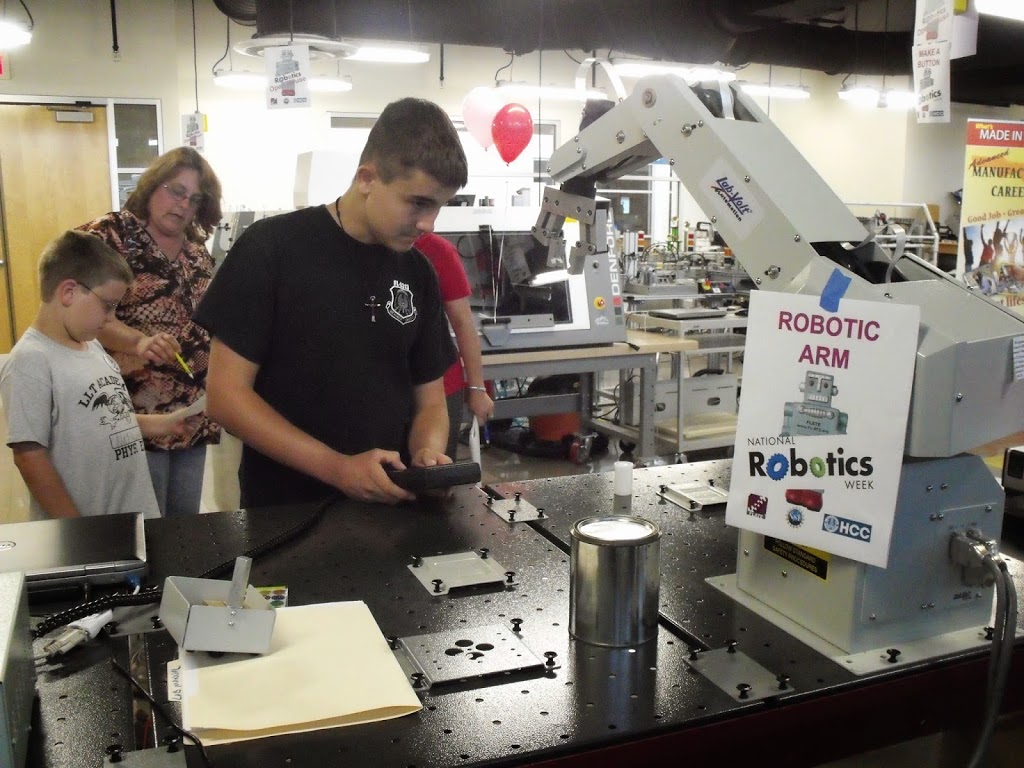
the significance of robotics, and its role in spearheading interest in STEM education. “Robotics and programming are not scary” pointed Janelle Baldwin who is a high school robotics mentor and coach at Middleton High School in Tampa. Jeanelle hopes anyone can look at robots and see their future in it. “We’re an ‘all girls’ team who are having a lot of fun while mastering knowledge about robots, STEM and attempting engineering feats that have not been seen before” Jeanelle said. To add more fun to STEM, visitors also got a tutorial on designing and making their own buttons.
“National robotics week is truly a celebration of American Innovation and an attempt to spur technology
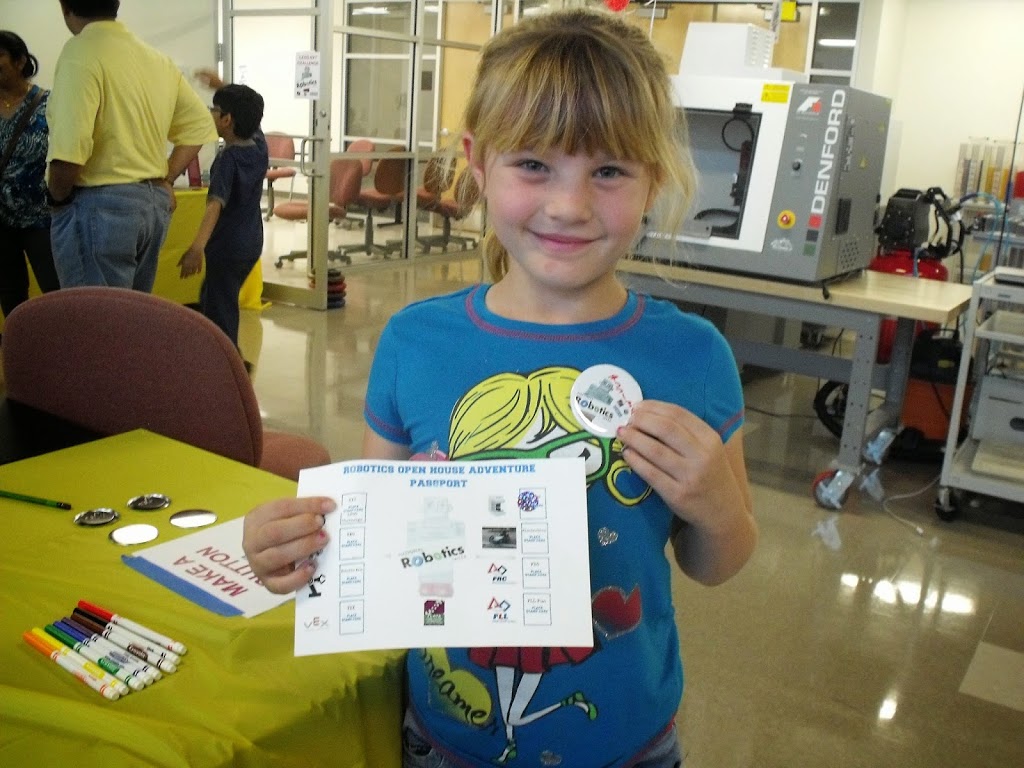
education” said Dr. Marilyn Barger, executive director of FLATE. The effort also serves as a gateway to showcase state-of-the-art high-tech equipment at FLATE’s engineering technology laboratory at HCC, and create awareness about the two year A.S. degree in engineering technology currently offered at Hillsborough Community College and 13 other state and community colleges across Florida. Through this effort “we hope to educate the public and inspire students of all ages to pursue careers in robotics and STEM” Barger said. For more information on National Robotics Day, or to enroll in one of FLATE’s all NEW and improved robotics camps visit www.madeinflorida.organd www.fl-ate.org. You can also read our blog article about upcoming camp dates, location and sign up instructions, or contact Dr. Marilyn Barger at barger@fl-ate.org, and Desh Bagley, outreach manager for FLATE at bagley@fl-ate.org.
Video coverage of the Robotics Week Open House hosted by FLATE at the HCC campus in Brandon, FL. The event was attended by students, parents and the general public. FLATE is the Florida Advanced Technological Education Center. It is a National Science Foundation Regional Center for Advanced Technological Education.
written by Michael, Ennis. Manufacturing Engineer, Harris Corporation
When Kelly Andino, an engineering technician at Harris Corporation’s, Government Communication
When Kelly Andino, an engineering technician at Harris Corporation’s, Government Communication
System’s (GCS) Development Manufacturing department, began working toward her Associate of Science (A.S) degree in Engineering Technology from Eastern Florida State College, she probably didn’t realize where her studies were about to take her. Since starting the A.S program, Kelly has not only traveled to Spain, but has also made her way across Florida speaking about her educational experiences and the importance of manufacturing careers.
In June 2012, while she was pursuing her degree, Kelly was asked to participate in the “Iberian Partnership for Technician Excellence.” Kelly and seven fellow students from Eastern Florida State College, Hillsborough Community College, Polk State College and St. Petersburg College were given the opportunity to travel to Usurbil, located in the Basque region of Spain. The group, which also included Tracy Moehler, another GCS Engineering Technician, spent time training in “Special Topics in Modern Manufacturing.”
“Since completing the training in Spain, Kelly has been asked by the Florida Advanced Technological
Education Center (FLATE), a statewide National Science Foundation Advanced Tchnological Education Center, to speak to groups across the state about the special training program and the benefits and rewards of working in manufacturing in Florida,” said Scott Gibbons, Engineering Manager for Development Manufacturing. “Kelly has truly become the ‘face’ of this important career and the spokeswoman for the importance of manufacturing educational opportunities.”
Kelly’s most recent speaking engagement was at the Forum on Engineering Technology, held in April at Polk State College in Bartow FL. Forty-three industry professionals, engineering technology program directors, and educators participated. Danielly Orozco-Cole, curriculum coordinator for FLATE noted “Kelly’s contribution, as successful Eastern Florida State College alumni, helps FLATE and engineering technology program coordinators evaluate the effectiveness and impact of the program in Florida. Kelly discussed why she chose this program and how the program has impacted her professional growth. Her opinion was an important and well received part of the forum.”
“Kelly is an outstanding example of the high caliber and dedication of GCS technicians and manufacturing employees,” added Scott. “Congratulations to Kelly on her achievements, including her graduation from Eastern Florida State College, and thanks to all of our manufacturing employees for their critical contributions to GCS.”
For more information Harris Corporation’s Government Communications Systems Division visit www.harris.com. For information on FLATE’s statewide engineering technology degree now offered at 14 state and community colleges across Florida visit www.madeinflorida.org, or contact Dr. Marilyn Barger at barger@fl-ate.org.
 Don’t miss this networking opportunity if you are you involved in…
· career pathways
· programs of study
· the common core
· adult career pathways
· career technical education
· counseling
· teaching and learning
· workforce development
Mark your calendar for the 2014 National Career Pathways Network (NCPN) conference to be held at the beautiful Buena Vista Palace on the Walt Disney World® Resort (across from Disney Marketplace). This year’s conference theme is Building Capacity: Aligning for the Future, and what better place for that setting than Disney World. What a fun and innovative combination! This year’s conference will be built around the Office of Career, Technical, and Adult Education (OCTAE) 10 Component Framework for Career Pathways as encouragement for each of you to build capacity for the next round of Perkins. Program Strands* include:
1. Legislation and Policies
2. Partnerships
3. Professional Development
4. Accountability and Evaluation Systems
5. College and Career Readiness Standards
6. Course Sequences
7. Credit Transfer Agreements
8. Guidance Counseling and Academic Advisement
9. Teaching and Learning Strategies
10. Technical Skills Assessments
*Program strands match the 10 components of the OCTAE Framework for Career Pathways and adult career pathways will be infused throughout the conference.
Whether you are a postsecondary or secondary educator or involved in workforce development in another capacity, the NCPN conference gives you the opportunity to learn and network. There are over 125+ sessions, an exhibit hall, best practices, and national experts . . . all for you to learn and grow. Here are some highlights from the conference:
Keynote and Featured Speakers
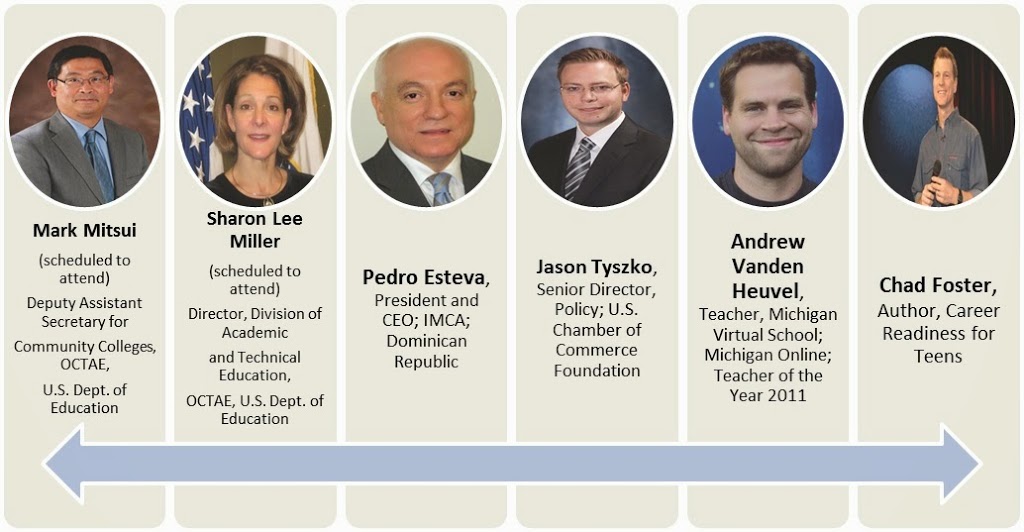
In addition to the regular conference strands, there are some special sessions there will be some great pre-conference workshops as well as special mini strands of presentations by the NSF ATE centers, together with a NSF ATE-sponsored lightning round on advanced technologies and cutting technologies in Florida facilitated by FLATE, SPACE-TEC and Laser-TEC.
For information and registrations visit https://www.ncpn.info/2014-ncpn-conf.php, or contact NCPN Conference Coordinator, Sheila Wilson at swilson@cord.org.
For information and registrations visit https://www.ncpn.info/2014-ncpn-conf.php, or contact NCPN Conference Coordinator, Sheila Wilson at swilson@cord.org.
This time of the year we are preparing for summer robotics programs for students, summer training for
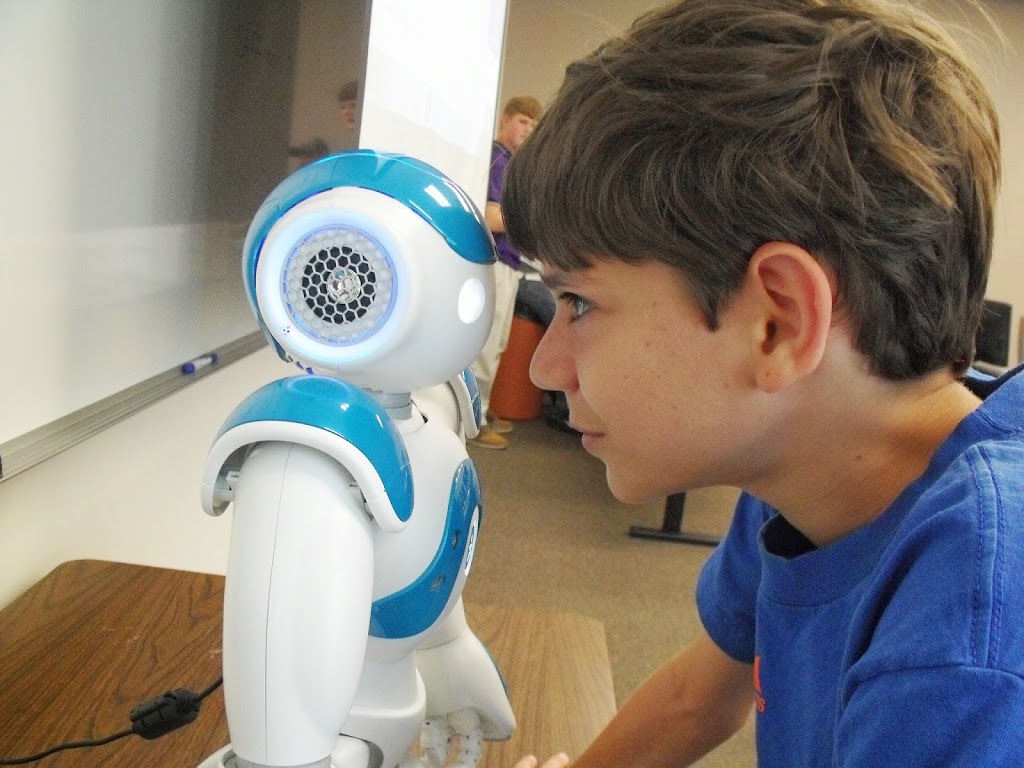
educators including programming languages that provide fundamental communications for any robotic system. Many students around the state are preparing for national competitions in FIRST Robotics, BEST, VEX and many other competitions that require designing, building, and programming an autonomous robot to perform certain tasks within given constraints which could include time, materials, cost, size, and functionality. With mentoring from employees in the manufacturing industry, we hope these outreach initiatives enable team members/participants to gain increased awareness of technical careers involving robotics as well as the skills needed to become successful in those careers.
Indeed, robots have become ubiquitous in our society and an integral part of manufacturing. Robotics researchers around the country are pushing their robotic capabilities to the edge every day. Typically, researchers compete for funds by writing grant proposals to a government agency, foundation, or other organization. A long technical document defining previous successes, accomplishments, a research plan and anticipated results are funded based on the organization’s criteria.
In recent years, funding agencies have turned to research level competitions as a way to award funding. This strategy focuses researchers on specific outcomes – just like student robotics competitions. There are distinct advantages for an organization to fund such a competition. All “proposals” focus on particular outcomes which drive innovation and bring together multiple approaches to the same problem.
Currently DARPA (Defense Advanced Research Project Agency) is running a Robotics Challenge (DRC)
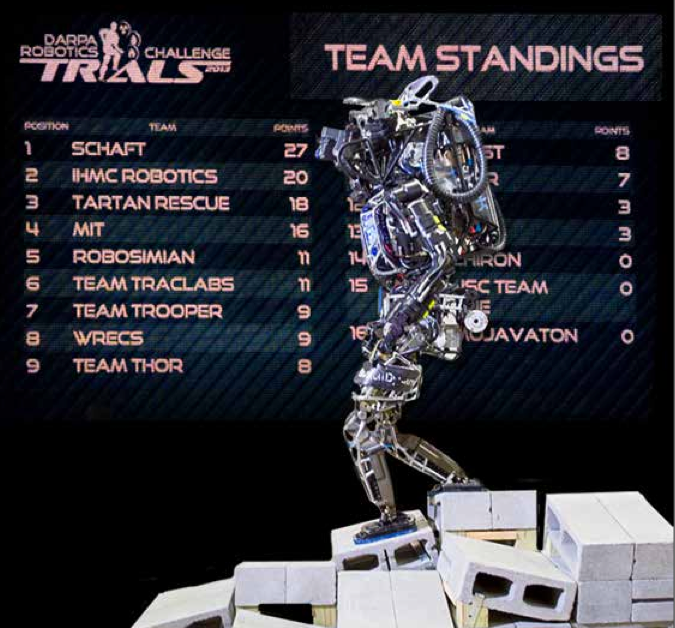
for researchers. The competition recently held a semi-finalist round in south Florida where 17 teams from around the world competed. The top eight competitors received funding to continue to prepare for the final competition in December. The 25 member Florida based IHMC (Institute for Human Machine Cognition)placed second overall and first among the teams that elected to use the Atlas robot as a platform. The DRC design challenge is focused on developing robots capable of assisting humans in responding to natural and man-made disasters and meant to be extremely challenging. The first phase teams guided their robots through eight individual, physical tasks that tested mobility, manipulation, dexterity, perception, and operator control mechanisms. The 2015 final will involve a set sequence of tasks and de-graded communications between the operators and the robots. We might say that DARPA is focusing research teams to “push the same envelope” with these competitions.
The moral of the story is that robots are not just toys for the young, but important parts of our evolving
society now infiltrating our daily lives. Students who get interested in robotics can apply their interest to a large number of applications and find themselves employed in applied technologies, or manufacturing. There are related high wage and high skill technical jobs at many levels requiring technical degrees, associate and/or bachelor degrees. For those students who love student competitions, they might be able to continue to compete at these higher levels.
FLATE is proud to partner with IHMC, Ocala to offer summer robotics camps for students in that area. Campers also compete in four different challenges during the week-long camps. They too are driving innovation and “pushing their own envelopes” to make their Lego® based bots do the impossible. At the same time, students are building strong foundations for many life skills including creativity, teamwork, decision-making, and perseverance and troubleshooting skills.
Continuing on this path, I encourage you to read more about our upcoming summer robotics camps for students and workshops for educators in this issue of the FLATE Focus. This being a special robotics edition, we also highlight our involvement in national robotics week that FLATE is hosting, and our extended Spring robotics outreach initiatives to local schools and students. We hope you enjoy the stories. As always send us your comments, questions and thoughts at news@fl-ate.org. Also check your answers to last month’s sTEm puzzle AND if you haven’t already, connect with us on LinkedIn!
