
Discussion Forum II (Sarasota)
Over the past two years, the Community College system has been a focus of discussion as the nation looks for ways to climb out of the extended downturn in the economy. Although companies are slowly starting to hire and rebuild their production teams, the new workforce is lean to the bone, and will never look the way it did prior to this recession.
How does this information and prediction affect what is happening in Florida? In January 2011, several Florida news outlets dug into the details of Associate of Science degrees and their relative earning potential. A snapshot of salary estimates provided by the state to the St. Petersburg Times that month highlighted the situation, however, a complete analysis has to include the fact that many of Florida’s state and community college students (and, therefore graduates) are older than the graduates from state universities, and often have some significant work experience as well.
Historically it has been demonstrated that over a working life, a university bachelor’s degree often generated more opportunities for upward career mobility and shifts into managerial positions and pathways (which also increases the long-term salary growth). Thus the question is whether the new workforce paradigm with its emphasis on a worker with secured multiple skills will shift this management pathway toward the A.S. graduates with their focused skill development education. One hint that this may be the case is the current starting salary profiles provided by the St. Petersburg Times, but you can read the numbers and interpret their significance yourselves:
Degrees from FL college Average & Corresponding Annual Starting Salary (of recent graduates)
No matter how you speculate on the long-term impact, today there is a growing demand for highly skilled technical workers who have multiple and integrated skills to deal with the increased complexity of many industrial processes and operations. New technologies are being implemented in hundreds of facilities across the country, and a disproportionately large number of current technical workers are approaching retirement. To stave off the impact of these two facts, many industry sectors are engaging in diverse efforts to redefine their workers and recreate their workforce structure. Both endeavors involve the associate of science graduate and associate of science degree structure.
In Florida, this degree restructure activity includes shorter term technical credit certificates that when possible incorporate a nationally recognized industry certification. It also means developing an A.S. degree pathway that will allow the A.S. degree holder at an appropriate juncture in their career to enter ABET engineering programs in Florida’s State University System. Florida industry and therefore FLATE wants to wrap technical skills into an associate degree that provides a strong STEM education knowledge base to provide the new 21st century worker with this degree to move into engineering and/or management career pathways. We are working on both these industry requests so stay tuned for more details in future Focus issues.
In the meantime enjoy this issue of the FLATE FOCUS with articles about FLATE’s high-tech robotics camps. You can also read a spotlight article on EEI Manufacturing, a woman owned and operated business in Clearwater Florida, and make note of how an elementary school in Florida is giving their students a taste of STEM. Last, but not the least, a new, exciting, and thought-provoking sTEm puzzle awaits to challenge your senses.
If it’s summer, it’s time to enroll the kids into FLATE’s robotics camps! FLATE is offering several STEM (science, technology, engineering, mathematics) based robotics camps this summer, and has expanded its program to offer, for the first time, an industrial robotics camp for high school students. Dr. Marilyn Barger, executive director of FLATE says the distinctive characteristic of all camps is a deliberate focus on the technology and engineering components of STEM. Barger notes that the “sTEm approach is not to belittle science and mathematics, but to emphasize the belief that science and math are basic constructs that allow engineering to bring a technology into practice.”
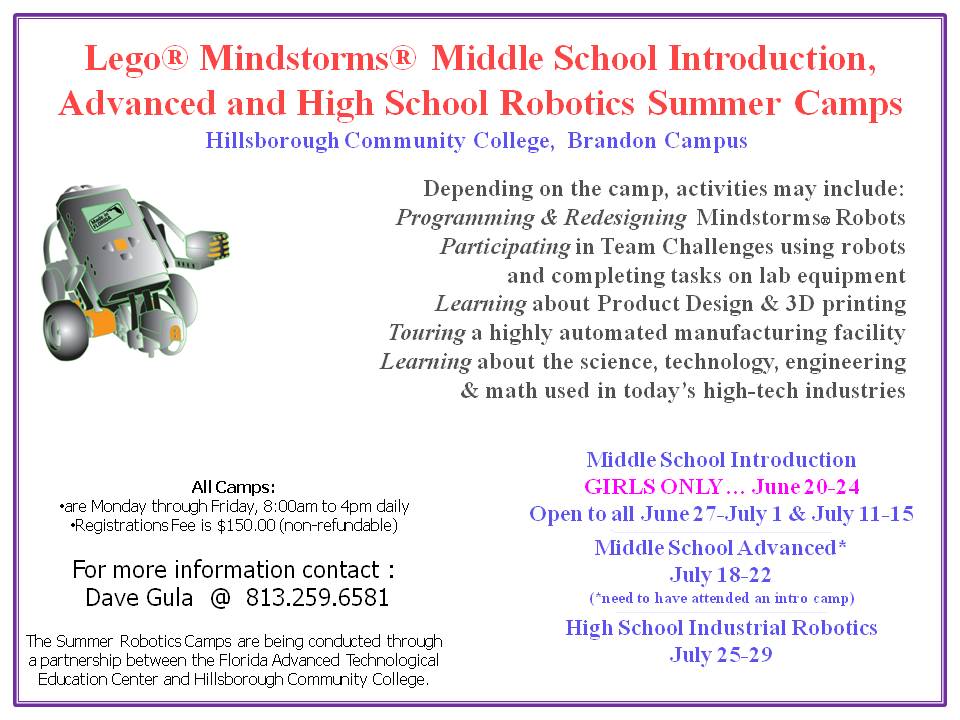
Using a robotics platform to emphasize a distinct STEM-based theme, FLATE’s camps kick into gear on June 20 with a week-long, introductory level camp for Girls only. FLATE will host two intro level camps from June 27-July 1 and July 11-15, and an advanced level camp from July 18-22. The intro and advanced camps are for middle school students, and involve reconfiguring Lego® Mindstorms® Robots and programming them to follow specific commands. Enrollment into the advanced camp is based on successful completion of the Lego®Mindstorms® introductory camp. The high school industrial robot camp, from July 25-29, offers many higher level challenges. Participants will learn how to operate the HAS-200 automated production line, the ZeissCoordinate Measuring machine, the Labvolt5-axis micro robotic arm, and take an in-depth tour of the Sun Hydraulics manufacturing facility and robot shop located in Sarasota, FL. They will participate in team-based challenges creating original solutions for real problems with Lego® Mindstorms® Robots.
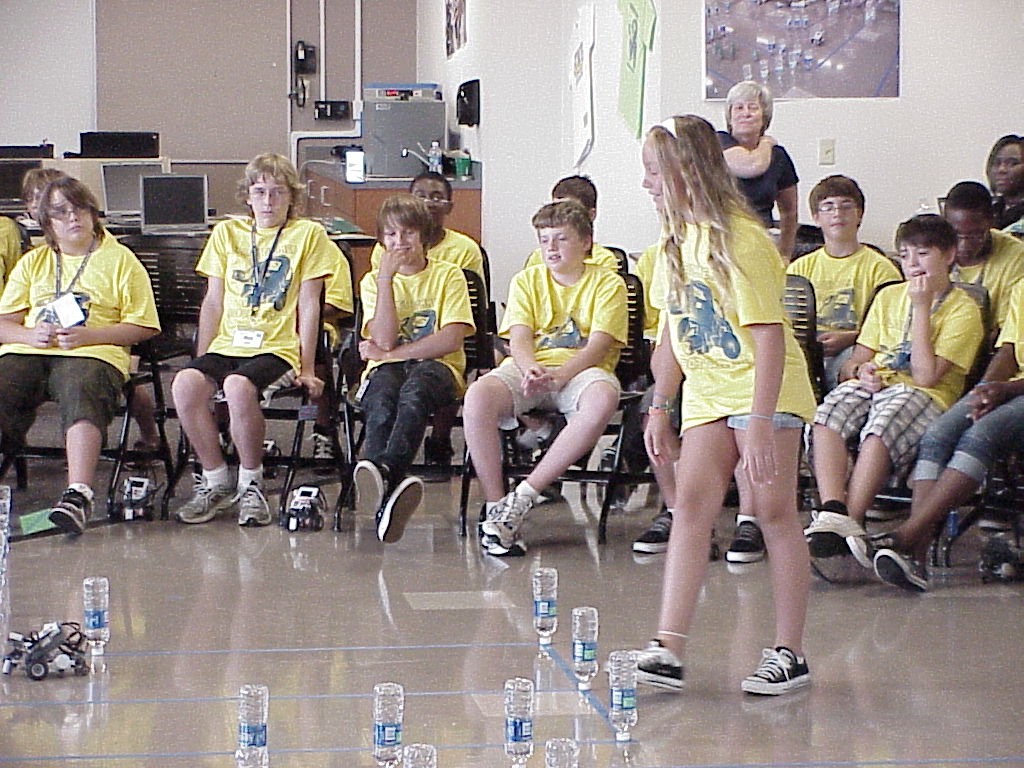
| Picture from the 2010, Robotics Camp I. |
Most camps will be held at the Brandon campus of Hillsborough Community College; the registration fee for each weeklong camp is $150. In addition to the camps at HCC-Brandon, FLATE has partnered with College of Central Florida and Florida Gateway College to offer similar camps in Ocala and Lake City.For more information, or to enroll in one of the camps visit www.madeinflorida.org/camps-workshops, or contact David Gula at gula@fl-ate.org and Dr. Marilyn Barger at barger@fl-ate.org.
At “We-Work-in-a Vacuum”, vacuum gages are used to indicate when a vacuum chamber is ready for a metal part coating process to begin. The technician opens the chamber door at room pressure and puts the part into the chamber. The technician understands that the metal part has molecules (oxygen, hydrogen, nitrogen gas) initially adsorbed (stuck) on the metal surface. The tech, closes the door, turns on a vacuum pump and watches the vacuum gage needle go down as gas is pulled out of the chamber through the pump. The gage performance is shown below. The tech sees that the pressure stays constant for a while, gently taps the side of the gage and notices that the pressure eventually starts to continue to go down.
The gage needle got stuck until the gage was tapped on the side. (yes or no). Submit your answers at https://www.fl-ate.org/.
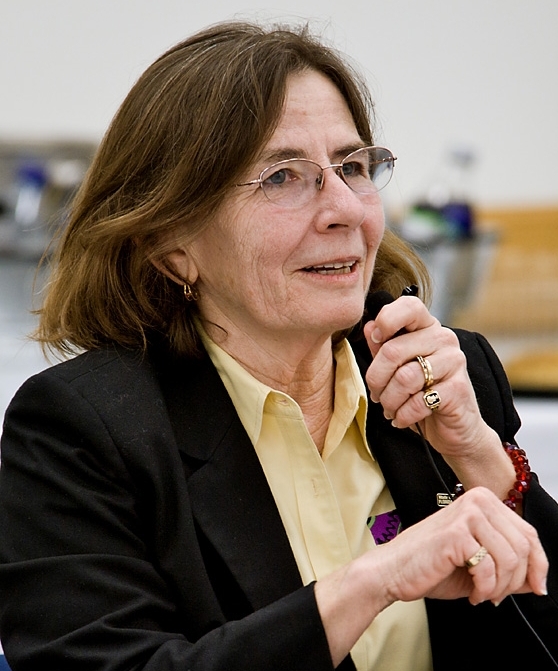
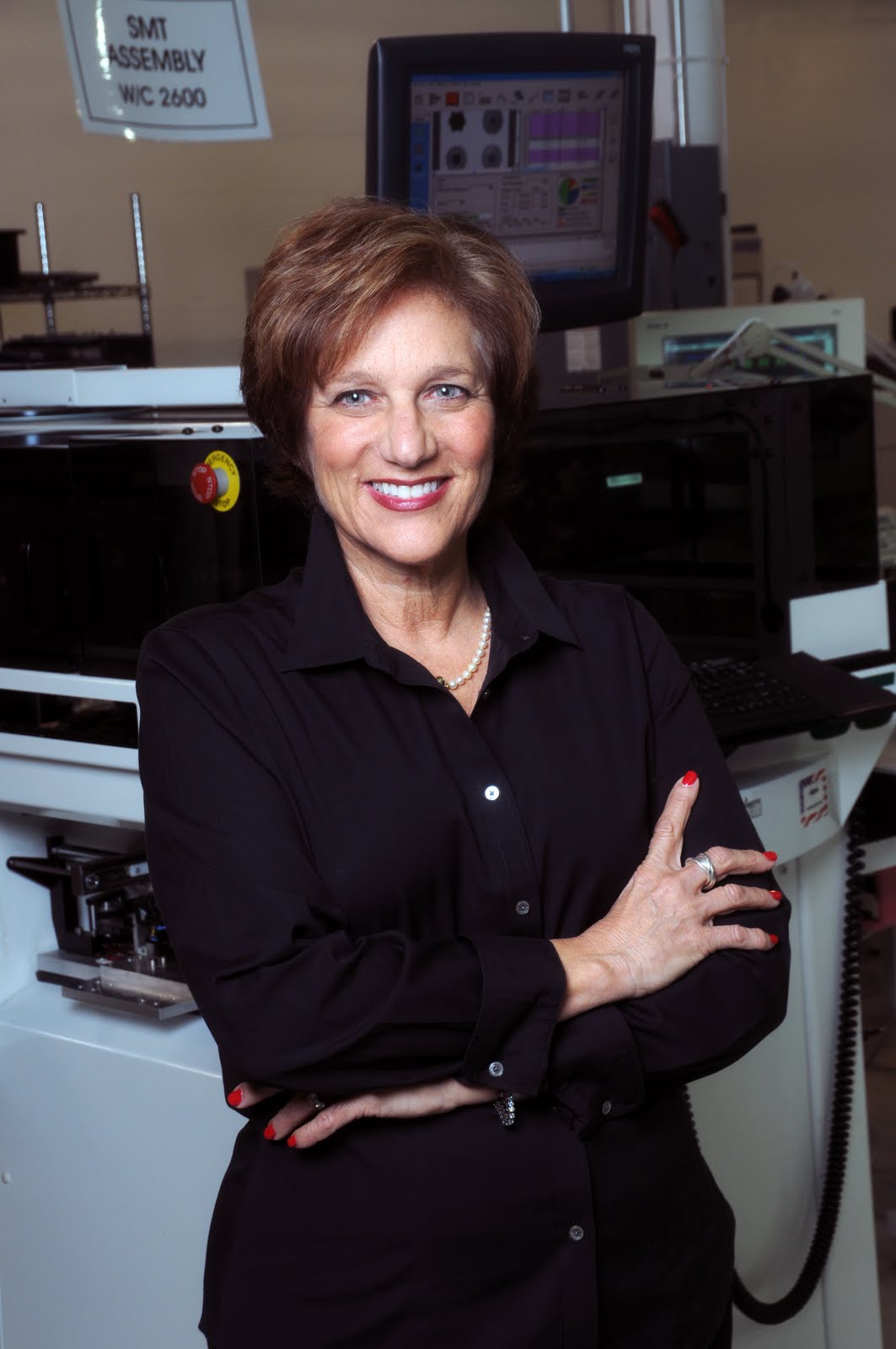
When it comes to combining credibility, quality and value, EEI Manufacturing Services, located in Clearwater, FL, stands tall in its commitment to excellence. EEI specializes in design services, circuit card assembly/box build, system integrations as well as comprehensive procurement logistic services capabilities. The company supplies products and services for instrumentation, aerospace/aviation, ground support, communications and simulations. Its distinguished list of customers include the Department of Defense, Department of Transportation, Department of Homeland Security, and medical and electronics and other industries requiring class III manufacturing quality standards.| Sue Englander. Founder & President of EEI |
Sue Englander, founder and president of EEI says the company’s success hinges on a simple, yet profound principle “God first, family second and EEI third.” Englander who founded EEI after a successful 18 year career in electronics distribution combines her expertise and product knowledge to forge solid business relationships. She says “maintaining an impeccable commitment to customer service, on-time deliveries, and building a culture that prides itself on unique management style and positive work environment” have augmented the success of the company.
Indeed, the company has made remarkable strides and positioned itself as a “synergistic solutions company” providing comprehensive engineering, manufacturing and training services to a diverse customer base. Since its establishment in 1993, the company has combined market knowledge with technical proficiency, has maintained an impressive track record of integrity that has earned EEI a premier spot in the electronics manufacturing marketplace. As a high-tech center and a certified ISO 9001:2000 company, EEI has taken several measures to streamline its products and services. The company has implemented paperless manufacturing processes whereby work instructions are directly tied to the manufacturing router; work instructions are customer/assembly specific and are part of the document control system. Among other steps, the company uses an automated optical inspection system that allows equipment to perform first stage inspection more rapidly, and capture potential process issues faster and with greater precision. EEI also recycles its solder waste so it doesn’t become hazardous waste, and has transitioned to low energy lighting in its manufacturing facility to reduce energy consumption. “EEI is committed to look for green solutions wherever practical and continues to explore as many options with various business partners to reduce our waste stream and energy consumption” Englander said.
EEI is poised to continue on this successful trajectory, and has received several prestigious awards. In 2009 it was named National Subcontractor and Region IV Prime Subcontractor of the year by the U.S. Small Business Administration. In 2008 it bagged the Raytheon SAS supplier excellence award, and was named one of the top 75 woman owned businesses by the Tampa Bay Business Journal in 2007. As a leading force, steering success of the organization, Englander has set the target for a 150% growth in gross revenues while doubling the size of its facility. EEI also seeks to expand its engineering services capabilities and box build capabilities to meet the growing needs/requirements of its clientele. Above all, it hopes to expand its training center curriculum and widen its service/focus to a national customer base.
In addition to being a respected regional high-tech manufacturer, and a woman owned and operated business, EEI is also one of FLATE’s strategic partners committed to enhancing technological education/careers in Florida. In 2010, EEI played a pivotal role in facilitating the “all girls” robotics camp in Pinellas County, FL. Englander describes FLATE’s robotics camp and outreach campaign as an effective vehicle in enhancing technology education, and giving students an opportunity to develop a passion for technology.
For more information on EEI contact Sue Englander at senglander@eeimfg.com, or visit www.eeimfg.com. For information on FLATE’s STEM based resources for K-14 students and educators contact Dr. Marilyn Barger at barger@fl-ate.org, or visit https://www.fla-te.org/.
Initiatives designed to bolster interest in science, technology, engineering and mathematics (STEM), particularly at the elementary education level, are gaining state and national attention. Then too, there is much more to science and mathematics than solving plain equations, or working in a lab. Traditional mindset tends to isolate these elements into individualized compartments mitigating the ability to think outside the box. In reality, STEM based subjects share an integral connection, and require high level thinking skills. While STEM may not be everyone’s calling, interest and aptitude can be inculcated through rigorous, streamlined programs that create excitement and passion for STEM.
A key component in establishing a firm base is starting at the basics. Mary Vaujin LeDoux, principal of Brooksville Elementary School says establishing a STEM base starts at the elementary level. LeDoux has taken a leading role in implementing curriculum that creates excitement and interest in STEM. She says she has a goal for the school, to be “a leader in using cutting-edge technologies” in Hernando County. The school is well on its way to accomplishing that goal. Brooksville Elementary School (BES) of Global Studies located in Brooksville, Florida is considered an “A” grade school, and is one of the largest elementary schools in Hernando County.
As a technology leader, BES has already positioned itself as a center of excellence in STEM education. The school has the highest FCAT scores in science among Title I schools, and
![]() |
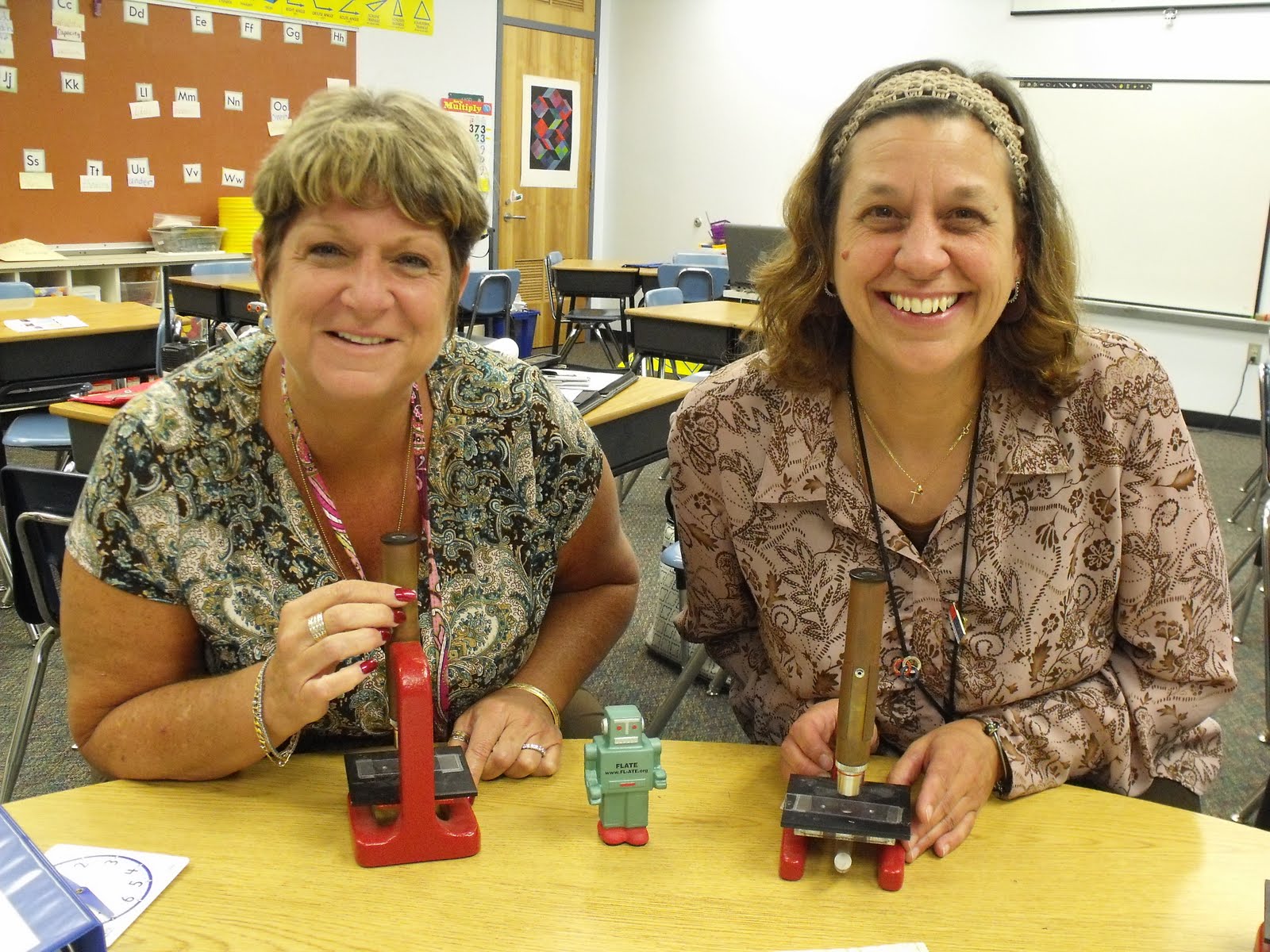
| Mary Vaujin LeDoux, Principal of BES & Anna Speessen (Teacher at BES) |
is at par with Challenger, a magnet school for math and science in Hernando county. Furthermore, the school’s science, engineering and math clubs offered to students as after school programs have sharpened students’ interest in STEM related subjects. Indeed, what sets BES apart from other elementary schools are high expectations combined with rigorous curriculum, and strong focus on building integral relationships with students. LeDoux who is known in the county for being an effective instructional leader describes the curriculum and instruction as “infused with technology.” As part of a countywide initiative to accelerate and enhance technology based education, BES has a coach to oversee its STEM programs/curriculum. Adoption of the Students Understanding Mathematics and Science curriculum, designed by the Northeast Florida Education Consortium, has further strengthened the school’s emphasis on “inquiry versus instructional based learning.”
In all of this, teachers play a pivotal role in generating interest in STEM. Projects like the gulf oil spill clean- up project initiated by Anna Speessen, one of the STEM teachers and a technology ambassador at BES, have served as an effective tool in creating a “hook” and cultivating inquiry based learning. The project required students to create oil collecting instruments, learn about the environmental/ecological impact of an oil spill, and the technology and tools involved in such an undertaking. LeDoux says “elementary kids generally want to be part of such activities, but rarely have these kinds of opportunities,” hence it is important to include them in STEM based activities.
Partnering with high-tech organizations like FLATE is yet another opportunity that has yielded tremendous benefits. The STEM workshop for teachers offered by FLATE in summer 2010 was critical in educating/bringing awareness about FLATE’s STEM based curriculum and resources to BES. LeDoux notes there is a need to spread the word about FLATE’s curriculum to other schools so they take advantage of the STEM resources FLATE offers. “We’ve always been an “A” grade school, but my job isn’t done till all the kids in Hernando County regardless of their backgrounds have the same level of access to resources, have the same level of exposure, and are performing at the same level” LeDoux said.
For more information on BES and an in-depth look at its STEM programs stay tuned for a sequel to this article in the next edition of the Focus. You can also visit www.hcsb.k12.fl.us/bes. For information on FLATE, and its K-14 STEM curriculum contact Dr. Marilyn Barger at barger@fl-ate.org, or visit https://www.fl-ate.org/.
Check how high school and college students are earning their spot in Florida’s high-tech fast lane! Visit https://madeinflorida.org/student-profiles
This year the United States Department of Education (US DOE) has rolled out new Program Integrity Regulations that will impact all public and private colleges across the nation. As we have come to expect, when it comes to important issues like this, Jim Simpson at Florida State College at Jacksonville is on top, if not ahead of this issue. He has developed a comprehensive review of these new rules as well as an implementation guide for Florida institutions.
The extensive rule changes by US DOE were put into play after comprehensive investigations and research that involved both public and private institutions on their current practices in these areas. The full suite of new regulations can be thought of as a “consumer” protection plan for students. Only time will tell if the new regulations significantly change the working landscape of post-secondary educational institutions, more importantly provide students with straightforward information that can help them make good decisions and investments for their futures. In the mean time, there is much ado and much to do, and it is useful for all of us to be aware of upcoming changes in the institutional frameworks at the post-secondary level.
The new rules cover : (1) state authorization (definition of various institutions and distance learning) (2) incentive compensation (3) credit hour definitions (including credit hour alignment to clock hours, and the relationship of credit hours to financial aid eligibility) (4) misrepresentation to students and others about graduate employability, nature of programs, and program costs (5) gainful employment reporting and disclosing (6) high school diploma validity determination (6) agreements between institutions that offer portions of a single program (7) structure and consistency of determining academic progress and (8) definition of full time enrollment to include repeated courses. There are also five rule changes and clarifications regarding Title IV programs/students. The full regulatory language can be found in the Federal Register and is posted at https://edocket.access.gpo.gov/2010/pdf/2010-26531.pdf. A summary of Jim’s comprehensive review of these new rules as well as an implementation guide for Florida institutions can be found at: https://faculty.irsc.edu/oesc/base_5.html, or by emailing Jim Simpson at jsimpson@fscj.edu.
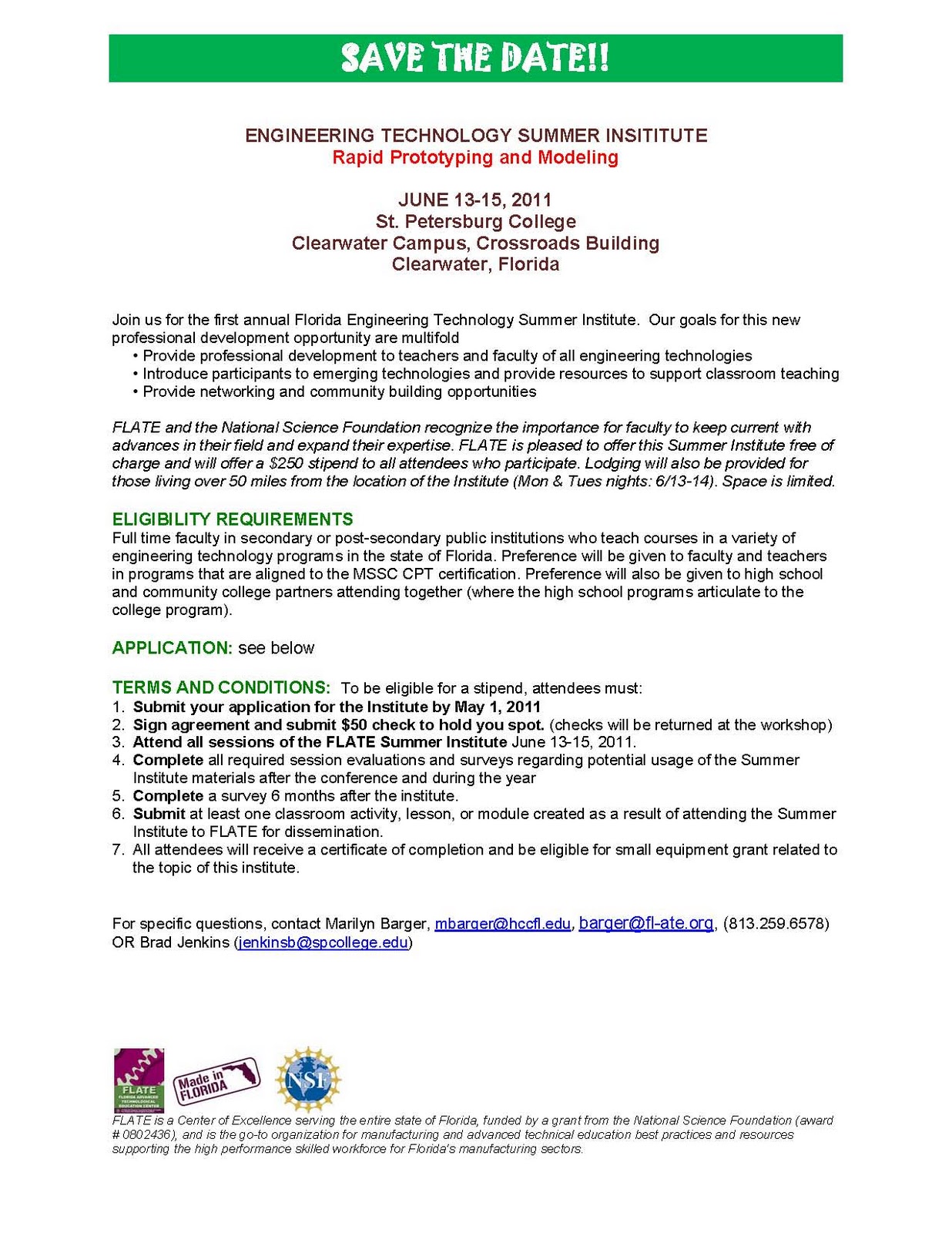
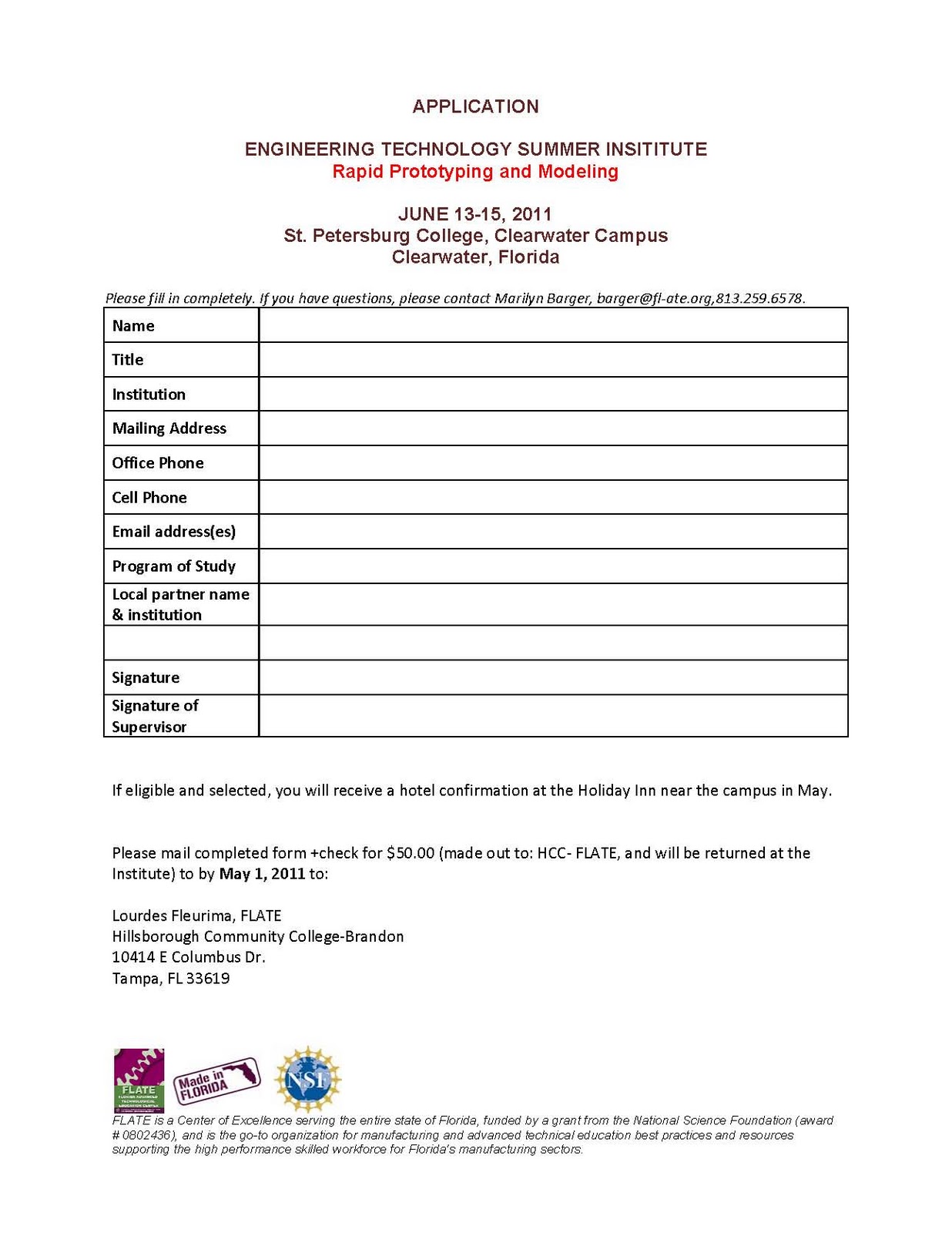
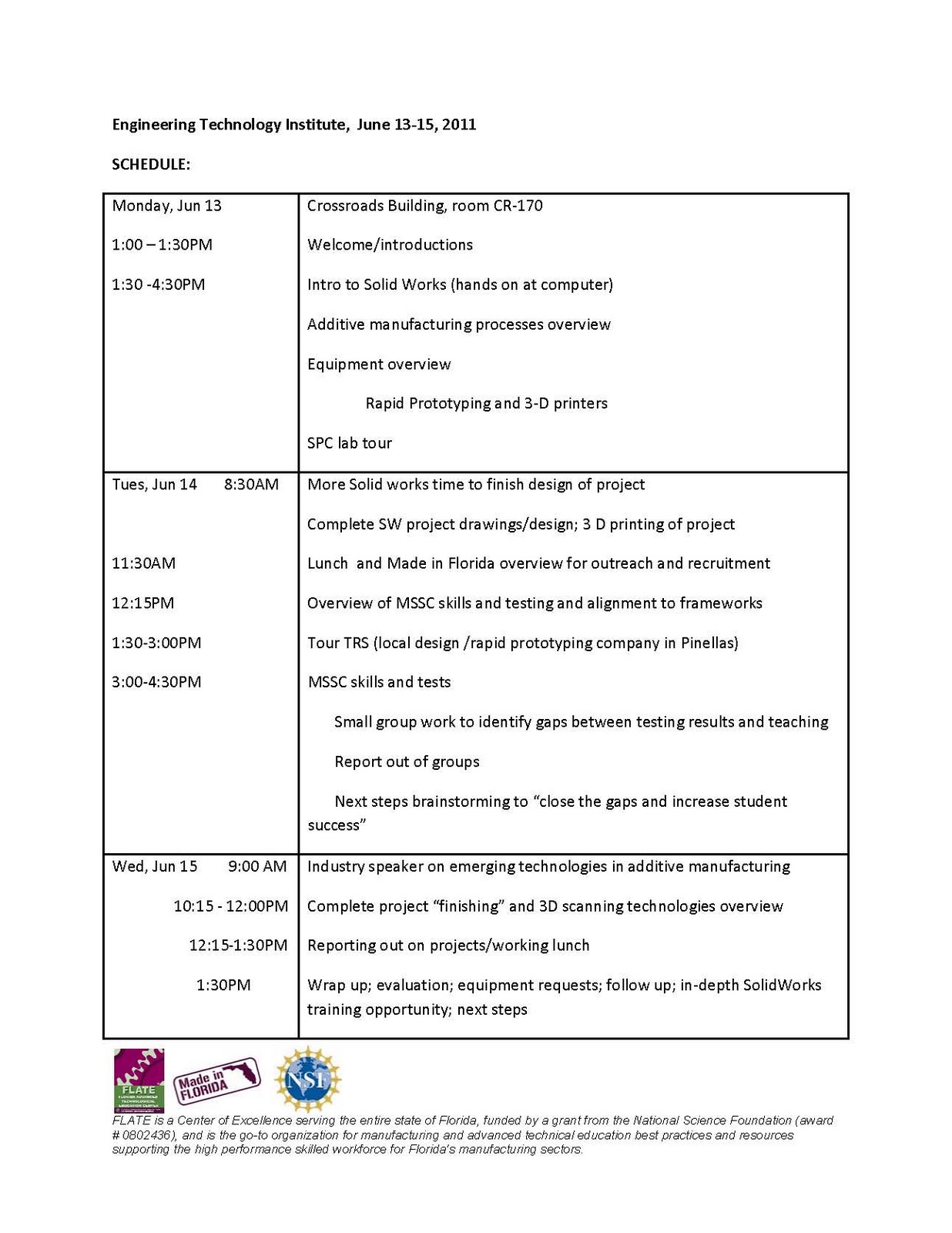
Please enjoy this issue of the FLATE Focus. But first, I’d like to call your attention to summer activities for students and teachers and faculty including our first engineering technology summer institute, as well as our robotics camps for middle and high school (new) students. We are also developing an energy-focused summer camp for teachers, summer sTEm conferences, and beginning our special project with Tknika in Spain. As always try your hand at this month’s puzzle, read the spotlight article on Pratt & Whitney Rocketdyne—one of FLATE’s strategic industry partners in south Florida, and learn about Tri-IT an NSF-funded project geared to increase the number of girls and women in IT and STEM.
If you have a special project or event you would like highlighted, please let us know.
Automation may have changed manufacturing operations, but globalization has changed the economics of “doing” manufacturing. Today’s global marketplace is comprised of the next generation of high-tech, high-skilled workforce that can work effectively across multicultural lines. FLATE is aware of this requirement in technical education, and is working with TKNIKA, an Innovation Institute for vocational training established by the Vice Ministry of Education of the Basque government, to help create best education practices for Florida’s A.S. degree programs. The initiative culminated out of a FLATE proposal to the National Science Foundation (NSF) Office of International Science and Engineering (OISE), and is one of eight pilot projects awarded to NSF Advanced Technological Education (ATE) Centers to support high quality international educational experience to community college students.
Dr. Marilyn Barger, executive director of FLATE hopes the initial OISE-supported, FLATE interaction with TKNIKA and its partner colleges in the Basque country will mature into a long term student and faculty partnership between colleges supported by the Basque and Florida governments. As part of the effort, students enrolled in the Engineering Technology (E.T.) A.S. degree program as well as appropriate faculty mentors from any of the ten colleges in the Florida state and community college system will participate in a structured technical education and training experience at a technical college in Spain. Student applicants are expected to be in the 2nd year of their degree program, have the endorsement from an E.T. degree faculty, and provide a summary of their intention to participate in the project.
The project is poised to provide outstanding learning experience for all participants. Faculty and students will be engaged in intense technical education and training experience to acquire direct technical knowledge and practice of skills in the area of renewable energies such as solar photovoltaic, solar thermal, and wind energy, electronic and mechatronics, industrial design and maintenance of industrial equipment. Training and education for instructors begin in July 2011; for students in May 2012, and will be take place at MH Elgoibar, IEFPS Usurbil GLBHI, Tknika in the Basque region of Spain.
Working directly with faculty and instructors in hands-on exercises students will participate in a 10 day training at each institution for approximately six hours a day. Faculty and students will work on state-of-the-art manufacturing related projects as dictated by TKNIKA—an ISO 9001:2000 certified Innovation Institute for vocational training. These sessions will incorporate a curriculum creation component that requires students to evaluate what they are learning in Spain to what should also be taught in Florida, their expectations for this new material, and how that content can be blended into their courses in Florida. Their training experience will conclude with short presentations on one aspect of their work and studies with the Spanish teams they worked with.
In terms of professional development, mentoring faculty from Florida will be attending instructional workshops. They will meet frequently with students to discuss status of projects and review content that has been presented. At the conclusion of the trip, the entire delegation to Spain will be expected to contribute content and skills assessment for developing tangible tools and solutions to improve ET-related curriculum and instruction materials within the Florida educational system. For information on the Iberian Partnership for Technician Excellence, and the award-winning, two-year A.S. degree in engineering technology contact Dr. Marilyn Barger at 813.259.6578/barger@fl-ate.org, or visit www.madeinflorida.org/engineering-technology-degree. For information on TKNIKA visit https://www.tknika.net/.
A “We-Make-it-All” quality control technician is checking the operation of two identical pressure relief valves, PRV-078 and PRV-321. Each valve is attached to identical fixed volume closed container batch reactors. The valve is supposed to open if the pressure in the container goes above a set value, and close when the pressure drops below that set value. When identical, equal amounts of the same valve test liquid reactants A and B are mixed in each tank, a volatile liquid, molecule C, is created. The reaction is extremely exothermic (gives off a lot of heat). The two valves should behave exactly the same way but they don’t. The technician sends the malfunctioning valve back to manufacturing to be reassembled.
PRV-321 is not working properly. (yes or no) Please submit your answers https://www.fl-ate.org/.
Terms of Use | Privacy Statement